How to Choose a Horticulture Lighting Manufacturing Partner
Price matters, but it should not be your first filter when choosing a horticultural lighting manufacturing partner. The wrong partner can lead to inconsistent product quality, failed projects, delayed deliveries, warranty claims, and damage to your brand reputation.
Instead, evaluate a manufacturer based on whether they specialize in horticultural lighting, whether their quality claims are supported by accredited laboratory testing and traceable quality control processes, whether their production capacity can meet your order volumes, and whether they have a track record of horticulture projects that you can verify.
A reliable manufacturing partner gives you confidence that the product will perform as specified, orders will be delivered consistently, and your brand will be supported after the sale.
Below is the checklist for choosing a reliable horticulture lighting manufacturing partner:
- Do they specialize in horticulture?
- Can they show you real lab accreditation?
- Does their production capacity match your order size?
- Ask for the quality control stages
- Do they do real design work?
- Ask for project history you can actually verify
- Check who else their design might be serving
Do they specialize in horticulture?
Many companies that market themselves as horticulture lighting manufacturers are actually assembly companies or trading brokers. They may be able to produce or source a fixture, but that does not necessarily mean they understand how lighting performance affects plant growth in real cultivation environments.
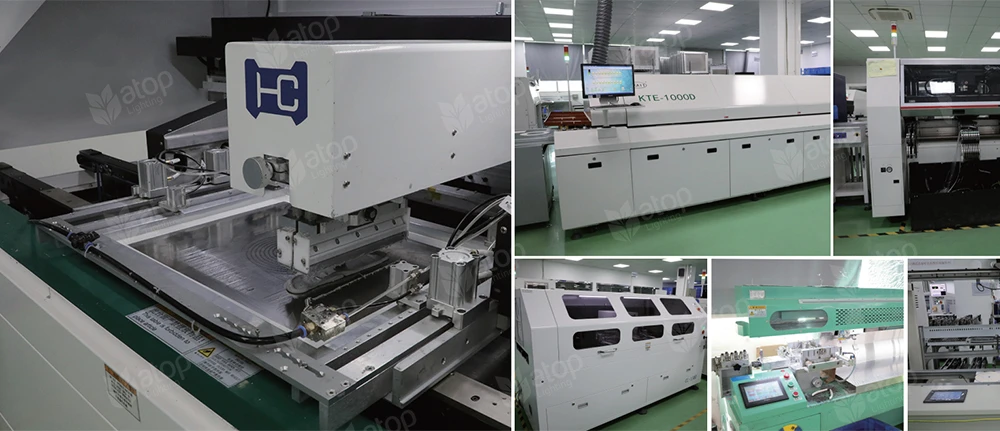
When evaluating a manufacturer's technical capabilities, check whether they have dedicated optical and thermal engineering teams, experience developing custom spectral configurations, and in-house production capabilities such as SMT lines.
For OEM buyers, these capabilities help ensure that your specified product can be manufactured consistently at scale. For ODM buyers, they are even more important because the manufacturer needs to turn your application requirements into a complete, production-ready lighting solution.
Can they show you real lab accreditation?
Selling horticultural lighting into North America, Europe, or Australasia without compliant certifications will stop your shipment at customs or void your client's commercial facility insurance.
Ensure the manufacturer's engineering team designs directly around target market standards:
- North America: UL 8800 (the specific safety standard for horticultural lighting equipment), UL 1598 (luminaires), and ETL/cETL listings. DLC (DesignLights Consortium) Hort qualification is also essential if your end customers rely on energy utility rebates.
- Europe & Global: CE, RoHS, ISO9001 quality management standards, and CB scheme compliance.
For us, these certifications are the basics. Our in-house lab is qualified by both SGS and TÜV and runs 66 separate test items covering electrical performance, optical performance, product safety, and long-term reliability.
Does their production capacity match your order size?
High-volume orders expose weak production systems. Capacity claims on a website mean little without supporting detail.
Before signing an agreement, verify their real production capacity:
- How many dedicated horticulture lighting lines do they run daily?
- Do they have multi-region facilities?
- How do they manage material allocations and supplies?
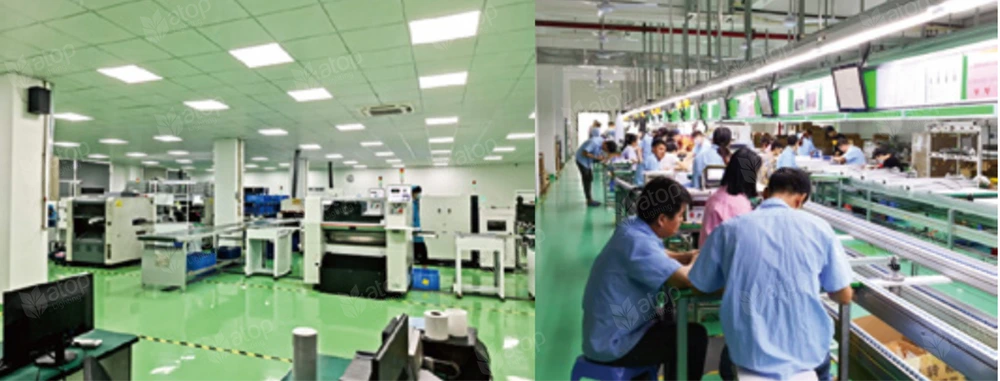
We run 14 horticulture lighting production lines at up to 1,500 units per line per day, and ship roughly 100 containers a month across our client base. We split volume across our Shenzhen facility and a 48,000 square meter plant in Vietnam.
For more details, check how we handle high-volume orders.
Ask for the quality control stages
Quality control is not simply an inspector looking at the lights before boxing them up. Quality control in manufacturing requires an end-to-end chain: SQE, IQC, IPQC/PQE, OQA/CQE.
If a manufacturer can’t map their process to something like this, it usually means quality checking happens informally, at whatever stage someone remembers to look. Also, request sample test reports.
Do they do real design work?
If you’re going ODM, ask what design services are actually included versus billed separately: photometric layout, spectrum customization, mechanical/housing adaptation, and thermal management.
Ask about the size and focus of their optical or R&D team. Can they develop custom spectra to match target crop requirements with tight variance? Do they provide free or low-cost lighting plans using professional software such as AGI32 or Dialux?
At Atop, we have a dedicated 10-person optical engineering team focused specifically on horticulture lighting. We also operate in-house SMT production lines, giving us tighter control over component placement, manufacturing consistency, quality, and product development.
Ask for project history you can actually verify
Case studies are easy to write and hard to fake convincingly, so push past the marketing copy. Ask for crop type, region, fixture mount, and if possible, a way to see field data.
When a manufacturer has already delivered working commercial installations, they are far less likely to make fundamental design mistakes on your custom project.
Our first project is a Russian greenhouse project on vine crops like cucumbers and tomatoes. For this project, we independently developed 3 new products and won this project for our customers. The plant yield increased by 30%.
Our journey started with a commercial greenhouse project in Russia, focusing on vine crops like cucumbers and tomatoes. For that installation, we engineered three brand-new fixtures from scratch, helping our client secure the project and achieve a 30% boost in crop yield.
Since then, we’ve delivered a wide range of custom lighting projects, consistently helping our partners win bids and grow their businesses. From simple blue and red light to full-spectrum fixtures integrated with automated control ecosystems, to dynamic lighting featuring adjustable spectrum and intensity tuning, our portfolio has evolved significantly over the year.
Every project has deepened our technical expertise, giving us the practical know-how to deliver better results, higher efficiency, and smarter lighting strategies for your next build.
Check who else their design might be serving
This matters more in ODM than OEM, but it applies to both. Does this manufacturer also sell finished grow lights under its own retail brand?
If so, ask directly how they prevent your custom spectrum or housing design from showing up in their own consumer line, or a competitor’s. There’s an inherent conflict of interest in a factory that’s simultaneously your supplier and your competitor.
This is one reason we don’t display horticulture lighting on our website at all. We don’t compete with our clients for market share.
If you are planning an OEM or ODM horticulture lighting project and want to discuss capacity, testing protocols, or customization options, share your requirements with the team. We can walk through the practical details that match your volume and market needs.