
GACP or GMP? Why the Line Shifts by Market
For medical cannabis facilities, GACP and GMP are familiar terms. But the boundary between them is often misunderstood.
A simple rule of thumb is: GACP covers cultivation, GMP covers processing.
In practice, it’s not that clean.
The line between GACP and GMP is not a fixed technical boundary. It shifts depending on jurisdiction, target market requirements, product registration strategy, and even how the facility is designed and operated. What counts as “cultivation” in one market may already fall under GMP controls in another, especially once post-harvest handling, environmental controls, or product intent come into play.
In our previous article, we looked at lighting requirements for GMP-compliant medical cannabis production. In this post, we’ll focus on a more strategic question that should come first, before fixture selection or room layout:
Which regulatory framework actually applies to your project?
Is it GACP or GMP? And where does the boundary between the two actually sit?
GACP vs. GMP: What the Regimes Dictate on Paper
On paper, the split between GACP and GMP looks clear.
Under the commonly referenced framework in EU GMP Annex 7 (aligned with PIC/S guidance), cultivation, collection, and harvesting of medicinal plants sit under GACP. The transition into GMP typically starts once the material moves beyond basic post-harvest handling, often around drying, cutting, and conditioning steps, depending on how the material will be used.
From there, further processing such as extraction, formulation, and finished product manufacturing falls under stricter GMP requirements.
GACP (Good Agricultural and Collection Practices), defined in the WHO guidelines (2003), governs the cultivation and primary handling of medicinal plants.
The focus is simple: produce consistent, traceable, and contamination-controlled raw plant material.
GMP (Good Manufacturing Practice), as defined in EudraLex Volume 4 (including Part I, Part II, and Annex 7 for herbal medicinal products), governs manufacturing activities once plant material enters a defined production process.
GMP is built around control systems: validated processes, documented traceability, environmental monitoring, contamination control, and batch consistency.
|
Cultivation & Collection Step |
Applicable Standard |
Regulatory Focus |
|
Propagation & Seed Sourcing |
GACP |
Genetic identity, traceability, propagation control |
|
Cultivation, Vegging, & Flowering |
GACP |
Environmental control, pest management, contaminant prevention |
|
Harvesting & Coarse Field Trimming |
GACP |
Physical contamination control, handling hygiene |
|
Primary Drying & Fine Cutting |
The Transition Point |
Moisture control, microbial stability, product classification triggers |
|
Extraction, Formulation, & Packaging |
GMP (Part I / II) |
Validated processing, cleanroom control, batch consistency |
Why the Line Between GACP and GMP Isn’t Fixed
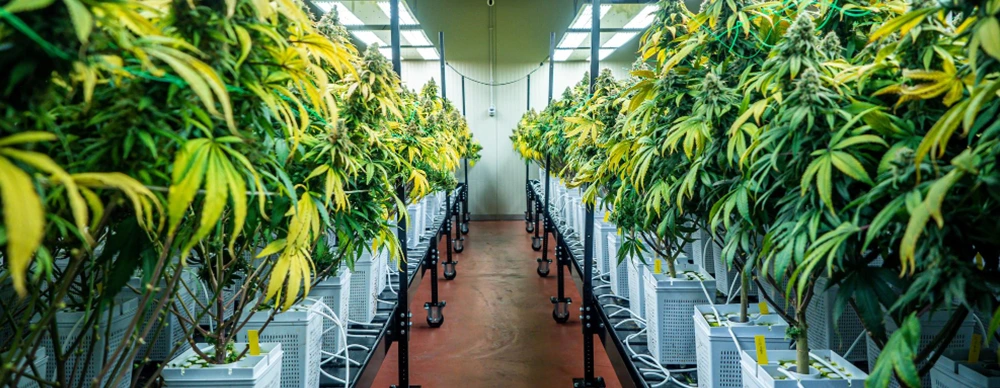
The textbook split between GACP and GMP is useful, but it doesn’t fully reflect how facilities are regulated in practice. In the medical cannabis industry, the boundary shifts depending on the country, the product’s intended use, and how strict the downstream market is.
Market access changes the answer.
In more flexible PIC/S-aligned jurisdictions such as Australia, the separation is still relatively clear. GACP covers cultivation and harvesting, while GMP begins at primary processing steps like cutting, drying, and trimming.
In stricter EU markets such as Germany, the expectation is different. Regulators and auditors often expect GMP-level controls to extend earlier in the process, sometimes into cultivation itself, especially when the material is intended for pharmaceutical use or export within the EU supply chain.
Proximity to the final product raises the bar, not a fixed line.
A cultivation room that meets GACP requirements in one market may not meet expectations in another. The gap is usually not about plant growth itself, but about supporting systems, documentation depth, environmental monitoring, hygiene controls, and process traceability.
Operators sometimes raise their own floor, because the regulatory minimum isn't what the market actually demands.
Some established producers have already adapted to this reality. A well-known example is Bedrocan, which developed an internal standard called GMCCP (Good Medicinal Cannabis Cultivation Practice).
The idea is straightforward: apply GMP-like discipline earlier in the chain. That includes:
- More detailed documentation
- Tighter process control
- Stronger environmental monitoring
- Greater consistency in cultivation practices
This approach helps bridge the gap between agricultural production and pharmaceutical expectations, especially for export markets with stricter compliance requirements.
Put simply, the question is not just “GACP or GMP?” It is: Compliant for whom, and selling into where?
Zoning a Single Facility Across Both Regimes
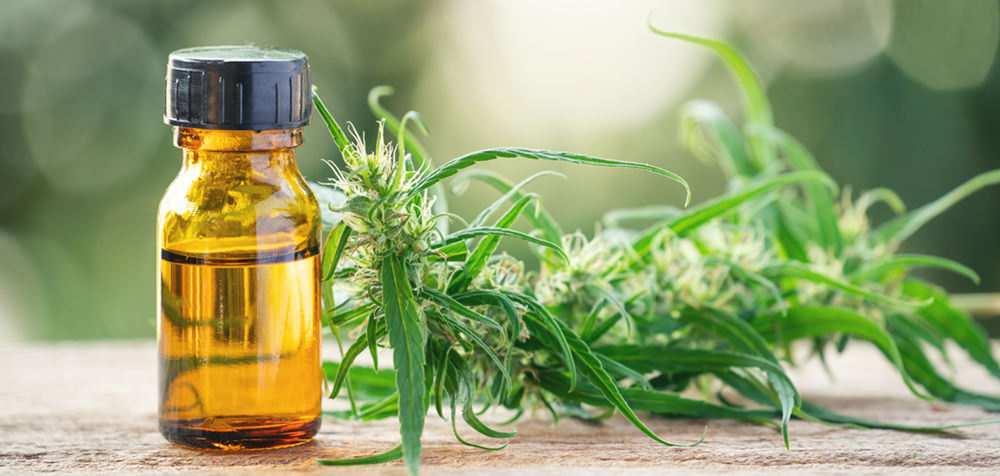
Many modern medicinal cannabis operations are vertically integrated, operating cultivation, primary processing, and sometimes even extraction within the same building or campus. In these cases, a common solution is to physically zone the facility into distinct GACP and GMP areas.
One area is dedicated entirely to cultivation and harvesting, and is subject only to GACP requirements. A separate area is dedicated to primary processing and obtaining active pharmaceutical ingredients, subject to GMP Part II. A third area, if the facility produces a finished product on-site, handles final manufacturing under GMP Part I.
Once a site is zoned this way, several physical systems have to reflect that separation:
- Airlocks and access control between the GACP cultivation zone and the GMP processing zone, to prevent uncontrolled material or personnel movement across the boundary.
- Independent HVAC for each zone, so contamination risk and environmental parameters in one area can't compromise the other.
- Defined material and personnel flow, a one-way path for plant material moving from cultivation into processing, and separate gowning/access protocols for staff working in the GMP-grade zone.
Lighting systems that serve both zones (or span the boundary) are particularly important.
LED grow lights that feature high industrial ingress protection to thrive in the agricultural zone, while simultaneously utilizing smooth, non-toxic material and glass lenses that can easily withstand the intensive chemical sterilization and hydrogen peroxide fogging protocols of a pharmaceutical GMP environment.
The "GMP-Washing" Risk
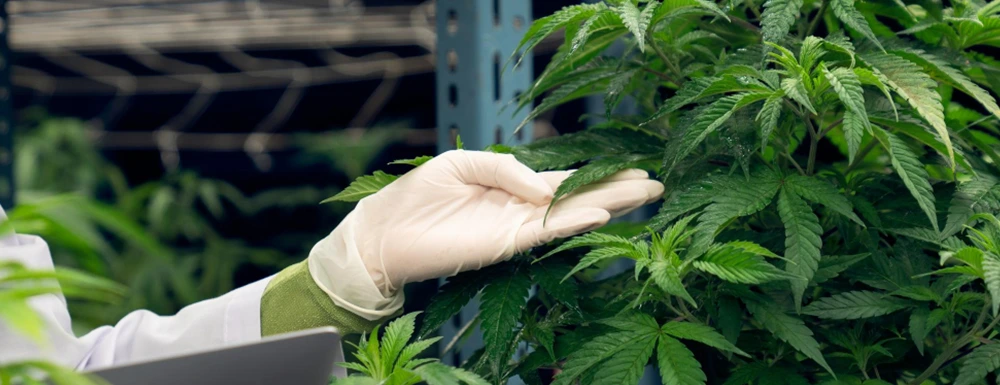
As the international medical cannabis market matures, a compliance issue has started to appear across parts of the supply chain: “GMP-washing.”
This refers to situations where cultivation material is presented as GMP-compliant or “pharmaceutical-grade,” even though it was actually produced under basic GACP conditions. In these cases, the operation may not have the documentation, process controls, or batch-to-batch consistency required under GMP expectations.
The problem is not just terminology. GMP is not defined by how a product looks or even how it tests at release. It is defined by whether the process can be consistently controlled and proven over time. Documentation in a GMP system is meant to demonstrate that consistency, batch after batch, in a way that can withstand audit scrutiny.
Lighting is one of the most sensitive variables in that system. Small shifts in spectrum, intensity, uniformity, or photoperiod stability can translate into measurable differences in cannabinoid and terpene profiles between cultivation cycles. When two batches are expected to be identical, but the lighting environment is not truly controlled or verified, variation is almost inevitable.
This is where the gap often appears. An operator may claim GMP-equivalent cultivation consistency, but if the lighting system cannot demonstrate stable and repeatable output with proper data logging, that claim becomes difficult to support. The plant itself may be healthy and well-grown, but what is missing is the evidence that the growing conditions were truly consistent in a controlled, repeatable way.
This is also why standards like Bedrocan’s GMCCP are frequently referenced. Their approach is not about branding a new category, but about extending GMP-style discipline into cultivation. The focus is on controlled environments, documented processes, and repeatable inputs so that consistency is not assumed, but demonstrated.
GMP-washing risk often shows up when facilities are designed around a minimum compliance baseline but are later positioned for higher-grade pharmaceutical or export markets. Once scrutiny increases, the absence of environmental traceability, including lighting data, becomes a limiting factor.
At Atop Lighting, we specialize in providing tailored, high-performance ODM and OEM horticultural lighting solutions to support stable output, thermal consistency, and integration with environmental monitoring where required.
Need a horticultural lighting solution? Contact us to discuss your project.
Regulatory disclaimer: This article is intended for general educational purposes and does not constitute regulatory or legal advice. Compliance requirements vary by jurisdiction and continue to evolve. Consult a qualified regulatory advisor for guidance specific to your project and target markets.