
Vertical Grow Lights Designed for Tower Farms
Vertical farming uses multi-layered growing systems that support crops such as lettuce, fragrant basil, and microgreens to increase food production while saving space. In indoor vertical farms, including cylindrical towers and flat-plane high-rise rack systems, a carefully controlled environment is essential for achieving high quality and high yields.
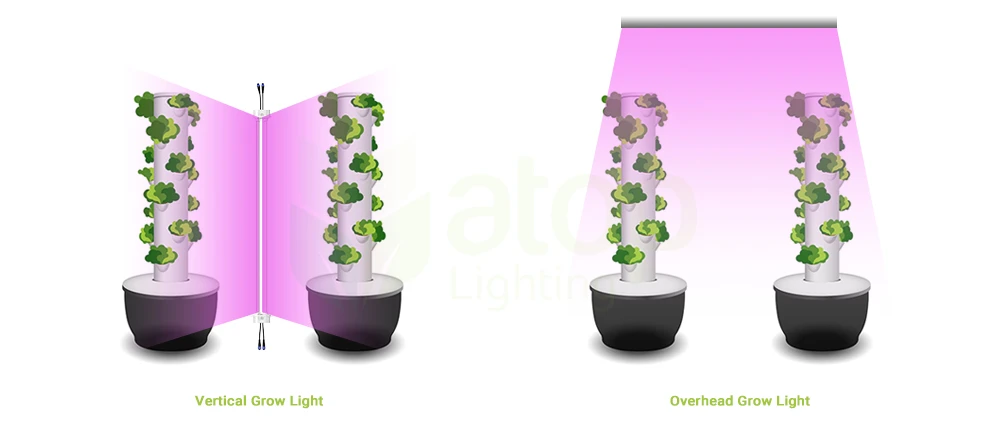
Overhead lighting is commonly used for high-rise racks and A-frame systems. However, in cylindrical vertical tower systems, overhead lighting is less effective because it cannot illuminate all sides of the tower evenly. For commercial tower cultivation, effective lighting becomes even more important. Therefore, vertical grow lights that provide more uniform illumination are key to the success of tower-based vertical farms.
What Are Tower Farms
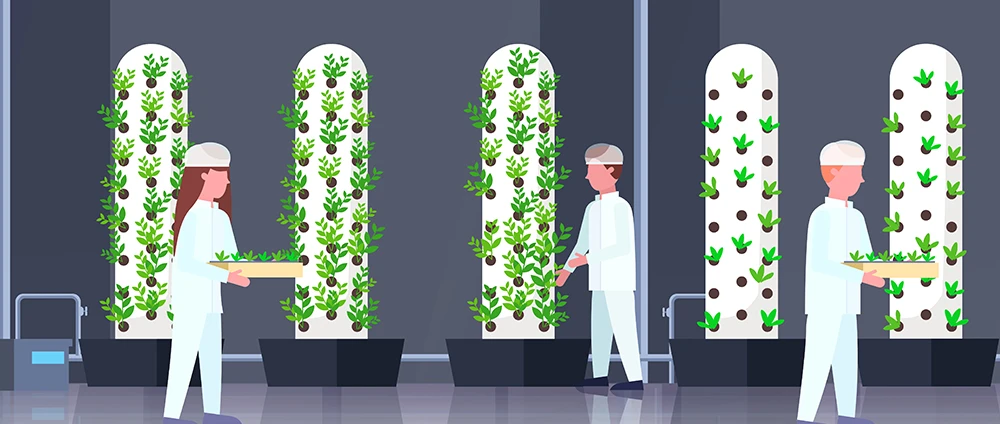
Tower farms are a form of vertical agriculture in which crops are grown in vertically stacked structures. These structures may be cylindrical, hexagonal, or arranged in tiered A-frame configurations. Unlike flat-panel vertical farms that spread crops horizontally across wide shelving, tower farms expand cultivation into three dimensions, allowing for a higher canopy density per square foot of floor space.
Tower farming typically relies on hydroponic or aeroponic systems. In these systems, plants receive water and nutrients directly at the root zone without the need for soil. This approach reduces water consumption by up to 90% compared to traditional farming and supports year-round production regardless of outdoor climate.
Most tower farms concentrate on fast-growing, high-value crops such as lettuce, kale, arugula, basil, cilantro, strawberries, and microgreens. These crops have shallow root systems that fit well into vertical growing pockets or cups, making them ideal for tower-based cultivation.
What Are Vertical Grow Lights
Vertical grow lights are specialized horticultural lighting systems engineered to meet the specific requirements of tower farms and other vertically oriented growing environments. Unlike overhead fixtures that project light downward onto horizontal crop surfaces, vertical grow lights are installed alongside the plants, delivering direct side illumination to vertical canopies and multi-layer planting zones.
These lights are typically designed as linear LED bars that fit seamlessly along the height of a tower or within the gaps between tiers. Vertical grow lights feature optical distributions tailored to vertical structures, ensuring that light is directed precisely toward plant surfaces. This design provides uniform illumination across all levels of the tower, minimizes shading, and helps maintain consistent PPFD values from top to bottom.
Why Vertical Grow Lights Are Essential
Vertical grow lights are essential for multi-layer planting towers because traditional top-down or bar lighting does not match the architecture of a system designed for high-density vertical growing.
In tower farming, light intensity decreases rapidly with distance according to the inverse square law. When using only overhead lighting, plants at the top of the tower may receive 800 to 1,000 μmol/m²/s of usable light, while plants just three feet lower may receive only 200 to 300 μmol/m²/s. This level is well below the minimum required for healthy leafy green production.
Plants on the lower tiers grow more slowly and require longer crop cycles than those at the top. This inconsistency makes harvest planning difficult and forces growers to choose between harvesting early, which reduces yield, or allowing upper-level plants to over-mature, which reduces quality. Insufficient light also triggers stress responses such as elongated stems, pale leaves, lower nutritional density, and increased vulnerability to disease.
Vertical grow lights solve these problems by placing LED fixtures directly alongside or between plant sites at each tower level. This approach provides even PPFD distribution across the entire structure, ensuring that all plants, regardless of height, receive the optimal light needed for consistent and healthy growth.
Vertical Grow Lights Designed for Tower Farms
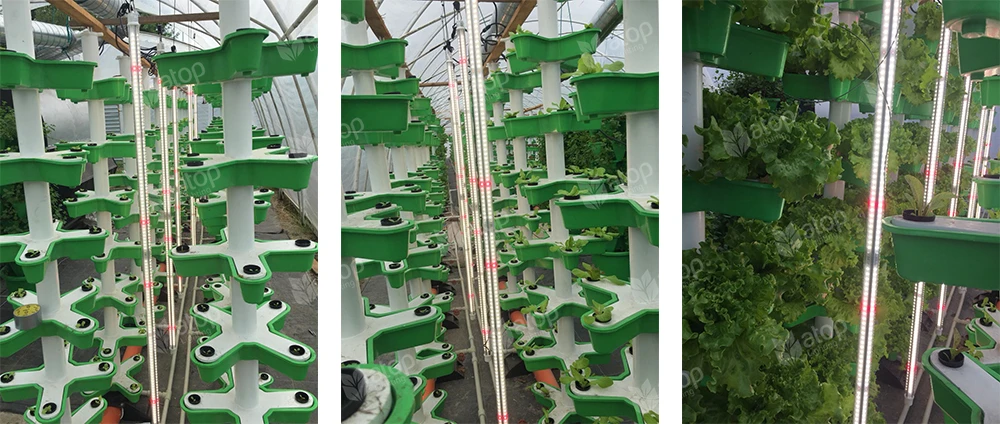
We provide vertical grow lights that are designed for commercial tower farms. The installation example shown here features our 100 W, 2-meter vertical grow lights used in a tower farm producing lettuce. The lights provide bright, uniform, and consistent illumination from the top to the bottom of each tower, allowing all plants to grow evenly. With the support of our grow lights, our customers achieve high yields of fresh, healthy, and vibrant lettuce.
At Atop, we are committed to delivering effective and energy-efficient horticultural lighting solutions that help growers achieve higher yields and superior crop quality. To support the unique demands of tower farming, we have developed our newest vertical grow light, the CHL03 Hi-Pipe.
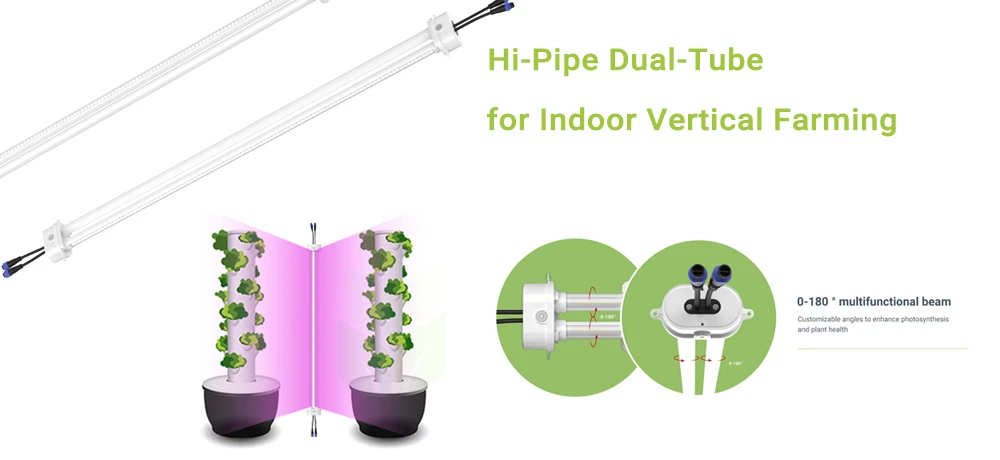
CHL03 Hi-Pipe is a vertical grow light specifically engineered for tower farming systems. Its slim profile allows it to fit easily between closely spaced plant sites without blocking access or interfering with tower rotation or irrigation mechanisms.
The CHL03 Hi-Pipe is designed with a unique 0 to 180 degree light distribution that provides optimal coverage for vertical canopies. This focused pattern delivers light precisely where plants need it, improving photosynthesis efficiency and overall plant health. The dual-tube structure increases light exposure while keeping the fixture compact, which is essential in high-density tower environments.
The standard spectrum is based on a cool white light with enhanced blue wavelengths, making it especially suitable for vegetative growth and cloning phases. Custom spectral options are also available so growers can match the light profile to the specific needs of their crops.
With an IP65 protection rating, the CHL03 Hi-Pipe is safeguarded against moisture and humidity commonly found in controlled-environment agriculture. This ensures reliable and stable performance over long operating hours.
Interested? Contact us.