
Programmable Grow Lights and Climate Control
Precision optimization is becoming increasingly important in modern horticulture. This is why Controlled Environment Agriculture (CEA) is gaining widespread adoption in both commercial cultivation and research laboratories.
Today, environmental control systems are more advanced and convenient than ever. Key factors such as lighting, temperature, and humidity can be centrally managed through a single interface, often via a controller or even a smartphone.
However, this level of control introduces two important questions. First, are your grow lights programmable (dimming, scheduling, and spectrum control)? If the answer is yes, a second question follows: Do your grow lights support integration with the environmental control system used in your grow space?
Grow lights that offer only simple on/off switching cannot deliver true precision or meet the diverse lighting requirements of different plant species and growth stages. Also, basic programmability alone is not enough. The key issue is whether your lighting system can integrate seamlessly with environmental control platforms to enable coordinated, automated operation.
In this blog, we will explore what programmable grow lights are, what makes a grow light “integration-ready,” and how these lights can be integrated with environmental control systems in controlled growing environments.
What Are Programmable Grow Lights?
Programmable grow lights are advanced LED fixtures that allow growers to customize and automate lighting parameters such as schedules, light intensity, and, in some cases, light spectrum. Unlike basic grow lights that simply turn on and off using a timer, programmable grow lights provide precise control over how plants receive light throughout their entire growth cycle.
These lights can be programmed to adjust brightness from 0–100%, simulate natural sunrise and sunset through gradual dimming ramps, and follow complex photoperiod schedules. Many models also offer spectrum control, enabling growers to fine-tune the balance of red, blue, and white light to match specific growth stages, typically more blue light during vegetative growth and more red light during flowering.
Programmable grow lights vary in functionality. Some operate independently using built-in controllers, while more advanced models can connect to environmental control systems. When integrated, the lighting can respond dynamically to environmental factors such as temperature, humidity, and CO₂ levels, enabling fully coordinated grow-room management.
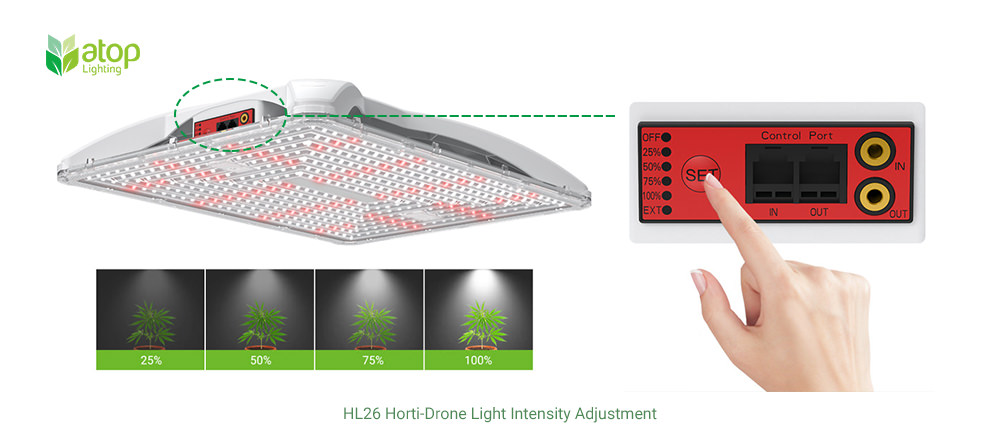
For example, our Horti-Drone series features flexible light intensity adjustment with multiple dimming options, including onboard buttons, RJ ports for external controllers, and 3.5 mm TRS jack connectivity. This versatility makes it easy to adapt the lighting system to different control setups and cultivation needs.
What Makes a Grow Light “Integration-Ready”?
An integration-ready grow light is designed to communicate seamlessly with third-party environmental control systems, enabling coordinated and automated management of the growing environment.
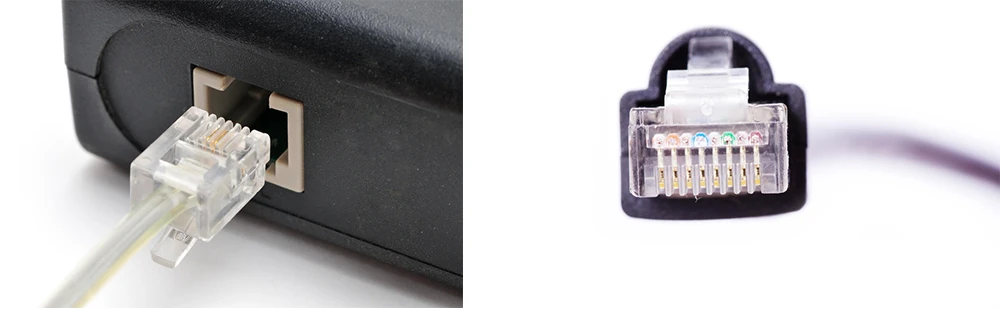
The most critical requirement is a standardized communication interface. Integration-ready grow lights typically include RJ ports, 0–10V dimming terminals, or digital communication protocols such as Modbus. These interfaces allow external control platforms, such as TrolMaster, Argus, or Priva, to send commands and receive feedback in real time. As a result, lighting can automatically adjust based on environmental conditions, such as dimming when temperatures rise or synchronizing light intensity with CO₂ injection.
Daisy-chain capability is another key feature, especially for commercial-scale operations. This allows multiple fixtures to be connected in series using simple cables, rather than requiring individual wiring from each light to the controller. A well-designed, integration-ready fixture can support about 15 to 50 units per chain, significantly reducing installation time, wiring complexity, and overall system costs.
How Programmable Grow Lights Integrate with Environmental Control Systems
Integration begins with the physical connection between the grow lights and the environmental control system. Typically, RJ cables connect daisy-chained fixtures to an adapter module, such as a TrolMaster lighting adapter, which then links to the central controller using standard communication cables.
Once connected, the environmental controller acts as the central “brain” of the grow facility. Sensors distributed throughout the space continuously monitor key parameters such as temperature, humidity, CO₂ levels, and light intensity. This real-time data is fed into the controller, which automatically adjusts multiple systems at once when conditions deviate from the target settings.
The software interface brings all components together. Platforms like TrolMaster allow growers to create complete environmental “recipes” that coordinate lighting schedules, temperature curves, humidity setpoints, and CO₂ levels into unified programs. These recipes run consistently day after day, delivering stable growing conditions that lead to predictable crop quality and reliable yields across every growth cycle.
Below is a video demonstrating how to use the TrolMaster Hydro-X controller to operate and manage our grow lights.
If you are looking for programmable LED grow lights or customized lighting solutions compatible with specific control systems, feel free to contact us.