
What is an RJ Port and Why It's Critical for Horticulture Lighting
In modern horticulture, precise control of the growing environment is essential. From adjusting light color and brightness to setting exact day and night cycles, growers depend on advanced LED grow lights to keep conditions consistent and reliable.
RJ ports are not the new technology, but they are still found in many high-quality LED grow lights. These interfaces allow growers to connect and control multiple lights at the same time, which is a key feature that separates simple hobby setups from commercial operations that produce healthy, high-quality crops all year round.
But how do you actually connect them? And what do they really do, and why does it matter?
What Is an RJ Port?
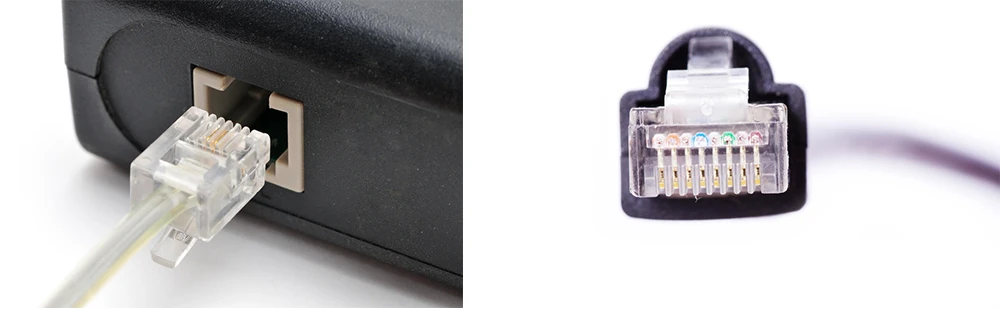
RJ stands for Registered Jack, which is a standardized type of physical connector. It is the small, clear plastic plug that you may find on telephone lines or Ethernet cables. In grow light systems, these same reliable connectors serve as the interface between fixtures and smart lighting control systems.
In horticultural applications, the most common RJ port types are RJ11, RJ12, and RJ45.
- RJ11 and RJ12 look almost identical but have different pin configurations. They are typically used for simpler analog dimming protocols such as 0–10V control.
- RJ45 connectors, which are the same type used for Ethernet networking, are used in systems that rely on digital communication protocols such as DMX512 or DALI.
How RJ Ports Work in Grow Light Systems
In grow light systems, RJ ports act as the communication bridge between the fixtures and external controllers. They enable precise dimming and synchronization across multiple lights, ensuring consistent performance throughout the growing area.
RJ ports are most commonly used for 0–10V dimming control. When the controller sends a voltage signal through the RJ connection, the grow light interprets that signal as an instruction to adjust brightness. For example, 0V means the lights are off, while 10V represents full intensity. This allows growers to fine-tune light levels according to each stage of plant growth, from seedlings to flowering.
Another important feature of RJ ports is their daisy-chaining capability. Instead of running separate control wires from the controller to each fixture, you can connect one light to the next using pre-made RJ patch cables. With this setup, a single controller can manage multiple fixtures at once. This design reduces installation time, simplifies wiring, and removes the safety risks associated with high-voltage control lines.
Why RJ Ports Matter in Commercial Horticulture Lighting
RJ ports give growers a simple, scalable, and cost-effective way to control light intensity and synchronize multiple fixtures across their facility.
Precise Lighting for Better Performance
According to Global Growth Insights, smart horticulture lighting systems with automation capabilities can deliver up to 52% higher yields and 49% energy savings. Plants respond best to precise Daily Light Integral (DLI) levels and controlled photoperiods.
With RJ port control, growers can provide the exact DLI during vegetative growth, trigger flowering with minute-accurate dark periods, and fine-tune light intensity as plants develop. This level of precision results in uniform canopies, predictable harvest schedules, and consistent product quality that can command premium pricing.
Reduce Labor Costs
In large commercial grow rooms, manually adjusting lighting can be time-consuming and labor-intensive. RJ-based automation reduces this process to just minutes, allowing skilled staff to focus on higher-value cultivation tasks. For multi-room operations running different strains or growth stages simultaneously, centralized RJ port control is not only efficient but essential for smooth operation.
Simplify Installation and Scaling
The RJ standard also streamlines installation and system expansion. Using simple, plug-and-play daisy-chain cables eliminates the need for complex wiring and specialized labor. This simplicity shortens setup time and reduces installation costs, resulting in significant savings on capital expenditures.
LED Grow Lights with RJ Ports
At Atop, we understand the importance of smart control in horticultural lighting. That’s why we offer a range of LED grow lights designed to meet the diverse needs of modern growers.
Take the Horti-Drone as an example. This fixture includes an RJ port for convenient and precise lighting intensity adjustment. It also supports multi-mode dimming options, such as onboard button control and 3.5 mm TRS jack dimming, giving you flexibility in how you manage your lighting environment.
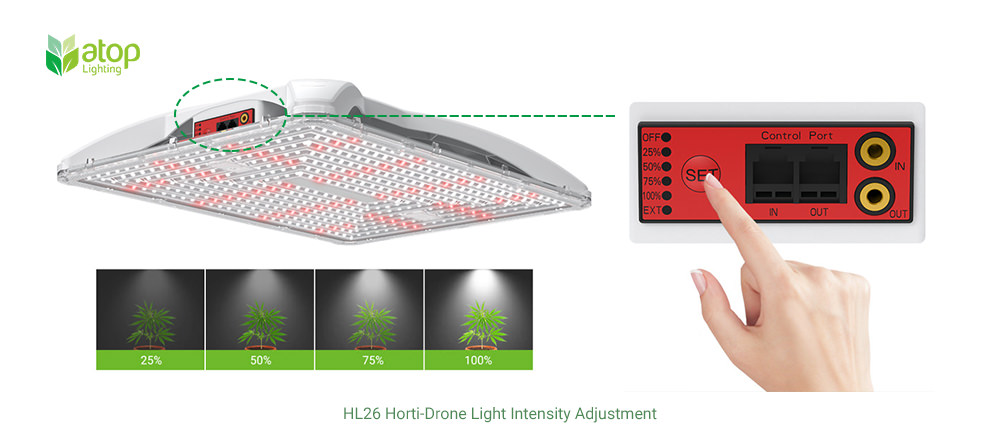
In addition, we offer custom spectrum services to tailor the light output to your specific crops and growing goals, ensuring optimal plant performance from seedling to harvest.
Contact us to learn more about our smart lighting solutions.