
How to Enhance Swiss Chard Stem Pigmentation Without Sacrificing Yield
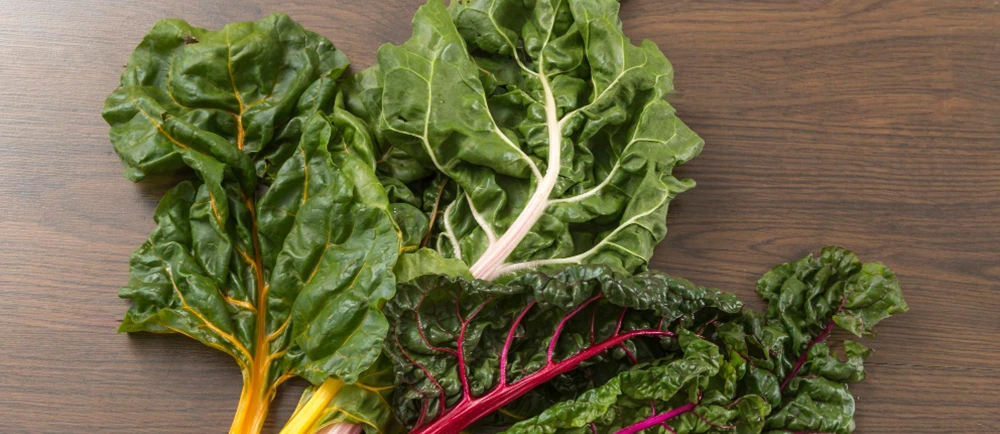
Buyers value Swiss chard for its vivid crimson, gold, and magenta stems, which bring visual appeal to salad mixes and fresh-market displays. For CEA growers, that premium is only achievable when crops consistently deliver both strong coloration and high marketable quality.
Lighting is one of the most important factors influencing pigment development. However, there is a key detail that many growers overlook: Swiss chard stem color is not primarily driven by anthocyanins. Instead, it comes from betalains, a distinct class of pigments produced through a different biochemical pathway and regulated by different environmental signals, including light spectrum.
Understanding this difference is critical when developing a lighting strategy. A spectrum designed to enhance anthocyanin accumulation in crops such as red lettuce may not produce the same response in Swiss chard.
In this article, we explore how spectrum control can be used to enhance betalain pigmentation and achieve premium stem coloration without compromising the yield and productivity required for profitable Swiss chard production.
Swiss Chard Stem Coloration
Swiss chard , also known as silverbeet, belongs to the same species as beetroot and sugar beet. Unlike its root producing relatives, Swiss chard is grown for its large leaves and brightly colored stems.
Most red, purple, and pink leafy greens found in premium salad mixes, including lettuce, radicchio, basil, and purple mizuna, derive their color from anthocyanins. Swiss chard is different.
Colorful cultivars such as 'Bright Lights' produce betalains rather than anthocyanins. These nitrogen containing pigments are responsible for the vivid red, pink, orange, yellow, and magenta stems that make Swiss chard highly attractive in fresh market and salad mix applications.
Betalains are divided into two main groups:
- Betacyanins: responsible for red, pink, and magenta coloration.
- Betaxanthins: responsible for yellow, orange, and golden hues.
For CEA operators serving premium salad mix markets, stem color intensity is an important quality attribute alongside yield, shelf life, and nutritional value.
This also means that lighting strategies developed for anthocyanin rich crops such as lettuce or basil may not produce the same results in Swiss chard. To maximize stem coloration while maintaining productivity, growers must take a different approach.
Light Regulation of Pigmentation
Many LED grow lights are designed around a single objective: delivering the highest possible efficacy and photosynthetic output.
To achieve this, manufacturers commonly combine broad spectrum white LEDs with deep red 660 nm diodes. This spectrum is highly effective for biomass production, but it does not always provide the light signals needed to maximize pigment accumulation.
When Swiss chard is grown under a spectrum dominated by white and red light, with limited blue or UVA radiation, plants generally prioritize vegetative growth. Leaf expansion and biomass accumulation increase, while stem coloration may remain less intense.
Blue light, particularly around 450 nm, activates cryptochrome photoreceptors that influence the production of protective compounds and pigments. Studies in controlled environment crops have shown that blue light can increase the accumulation of secondary metabolites through photoreceptor mediated signaling pathways (Bian et al., 2015; Kong & Zheng, 2020). Evidence from betalain producing species suggests that similar mechanisms may contribute to enhanced betalain accumulation and improved stem coloration in Swiss chard.
Supplemental UVA can further strengthen pigmentation responses by acting as a mild environmental signal. When applied at appropriate levels, UVA may stimulate additional pigment accumulation without causing severe growth reductions.
Balancing Stem Color and Productivity
The challenge is finding the right balance between color development and yield.
Increasing blue light and UVA can improve stem pigmentation, but excessive levels may reduce leaf expansion, slow growth, and ultimately lower marketable yield. For commercial growers, the goal is not simply maximum color. The goal is achieving stronger coloration while maintaining profitable production.
Far red light is often misunderstood in this context. Many growers associate far red with excessive stretching and avoid it altogether. While this concern is valid under certain conditions, far red can be a useful tool when used as part of a balanced spectrum.
Far red primarily acts through the phytochrome system. A high far red to red ratio signals canopy shade, which can trigger stem elongation responses. In a compact leafy crop such as Swiss chard, excessive elongation is undesirable.
However, plant responses depend on the entire spectrum rather than a single wavelength. Blue light suppresses stem elongation, while far red can promote leaf expansion and canopy development. When sufficient blue light is present, the growth response can shift away from stem stretching and toward larger leaf area.
A larger leaf area allows plants to intercept more light, improving photosynthetic capacity and helping maintain biomass production. This creates an opportunity to enhance pigmentation with blue light and UVA while using far red to support overall crop growth.
When properly balanced, blue light, UVA, and far red can work together to improve stem coloration without sacrificing yield.
With a carefully designed lighting strategy, growers can achieve stronger stem pigmentation while maintaining the yield, harvest frequency, and crop uniformity required for profitable commercial production.
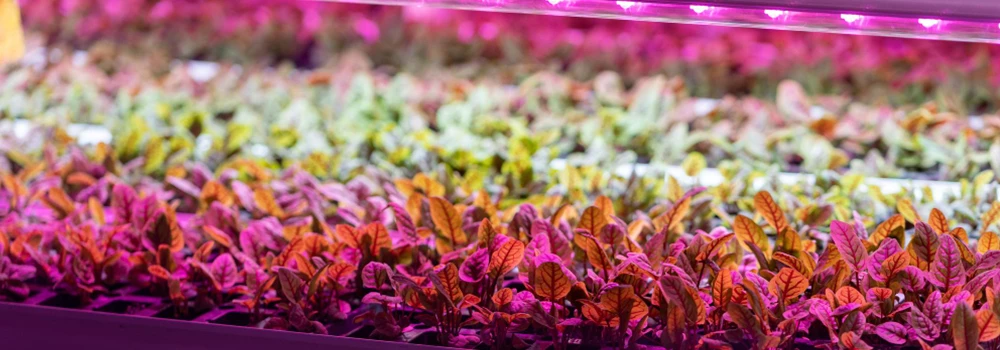
Custom Grow Lights Engineering for Commercial Facilities
Whether your customers are designing a new vertical farm or upgrading an existing multi tier leafy green production system, lighting should be engineered around both crop performance and facility requirements.
As a trusted ODM and OEM horticultural lighting partner, we develop custom LED grow lights tailored to each project's layout, cultivation method, and crop profile. From multi channel spectrum control to integrated UVA and far red supplementation, our solutions are designed to help growers optimize both quality and productivity.
Contact us and let our team help design lighting solutions that supports your projects.
References
Bian ZH, Yang QC, Liu WK. Effects of light quality on the accumulation of phytochemicals in vegetables produced in controlled environments: a review. J Sci Food Agric. 2015 Mar 30;95(5):869-77. doi: 10.1002/jsfa.6789. Epub 2014 Jul 21. PMID: 24930957.