
Winter Greenhouse Lighting Checklist
When temperatures drop and natural daylight shortens, many greenhouse operations must invest in supplemental lighting to sustain year-round production. Winter is not a downtime for greenhouses. It is a high-stakes season where light availability, energy efficiency, and profitability determine success.
Supplemental lighting during winter allows growers to maintain consistent plant growth and development, regardless of outdoor conditions. However, simply installing LED grow lights and turning them on is just for disappointment.
True winter success depends on converting limited natural light into a predictable, profit-driven lighting strategy. This includes managing Daily Light Integral (DLI), optimizing light spectrum for specific crops, and designing an efficient fixture layout while keeping energy use and operational costs under control.
In this blog, we explore the practical principles of winter greenhouse lighting. If you are considering supplemental lighting this season, use the following checklist to ensure your investment delivers measurable returns instead of unnecessary expense.
Pre-Winter Planning and Light Analysis
So the first question for winter greenhouse lighting is, how much supplemental lighting do your plants need? Here are two key factors to measure: the DLI targets and the existing greenhouse light level.
Start with DLI targets
Before winter begins, identify the ideal Daily Light Integral for the crops you are growing. Different crops have very different light requirements:
- Low-light crops, such as many herbs, typically require 4 to 15 mol/m²/day
- Medium-light crops like lettuce and petunias perform best at 12 to 20 mol/m²/day
- High-light crops such as tomatoes and peppers generally require 20 to 30 mol/m²/day or more, depending on cultivar and production goals
Measure existing light levels in your greenhouse
Next, assess how much natural light your crops actually receive during winter. Use a PAR meter to collect PPFD readings at crop canopy height. Take measurements across multiple locations, including edges and corners, not just the center of the greenhouse. These readings allow you to estimate the average in-greenhouse DLI from natural sunlight.
To find the solar energy for your location in winter, you can check the National Solar Radiation Database, NASA Earth Observations, or Government/University Agriculture or weather websites.
Calculate the DLI gap
The DLI gap represents how much additional light must be supplied using supplemental lighting.
DLI Gap = Target DLI − Natural In-Greenhouse DLI
For example, if the target DLI for tomatoes is 25 mol/m²/day and your measured winter DLI is only 6 mol/m²/day, the DLI gap is 19 mol/m²/day.
Convert the DLI gap to the required PPFD
To determine how much light fixtures must deliver, convert the DLI gap into PPFD using the planned photoperiod. The relationship between DLI and PPFD is:
PPFD (μmol/m²/s) = (DLI × 1,000,000) ÷ (photoperiod in seconds)
If the DLI gap is 19 mol/m²/day and the supplemental lights operate for 16 hours per day, the required supplemental PPFD is approximately 329 μmol/m²/s.
Spectrum Optimization
In the low-light conditions of winter, considering light intensity alone is not enough. Light quality is equally important for maintaining healthy growth and consistent yields. A well-balanced, full-spectrum light covering the PAR (Photosynthetically Active Radiation) range of 400 to 700 nm forms the foundation of effective supplemental lighting.
Within this range, blue light supports compact vegetative growth, leaf thickness, and stomatal function, while red light drives photosynthesis and promotes flowering and fruit development. This balance is effective for most greenhouse crops across growth stages.
Far-red light, in the 700 to 750 nm range, should also be considered. Although far-red wavelengths fall just outside the traditional PAR band and contribute less directly to photosynthesis, they play a critical role in plant morphology and developmental responses. Far-red light interacts with the plant phytochrome system, influencing stem elongation, shade-avoidance responses, and flowering initiation. These effects are especially important for long-day plants and fruiting crops grown under winter conditions.
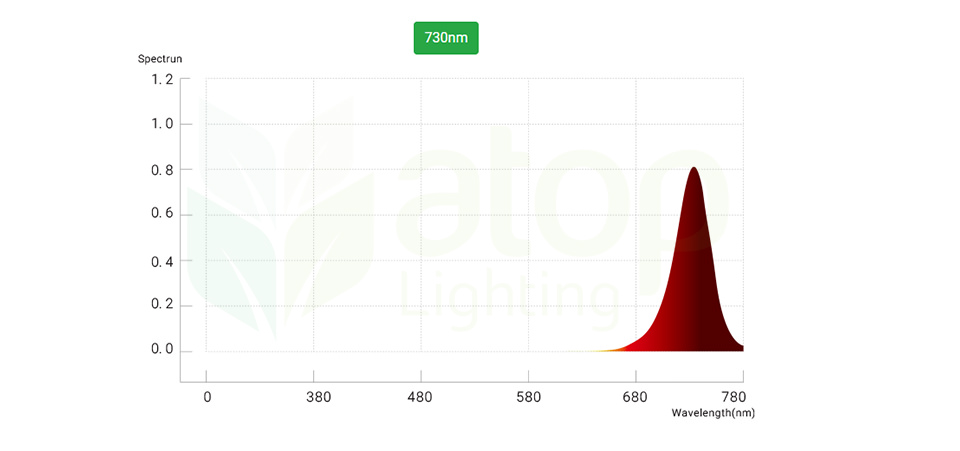
Research published in Horticulture, Environment, and Biotechnology demonstrated that adding far-red light to red and blue inter-lighting LEDs significantly increased growth and yield of greenhouse sweet peppers during winter production [1]. This highlights the value of spectral tuning beyond PAR alone.
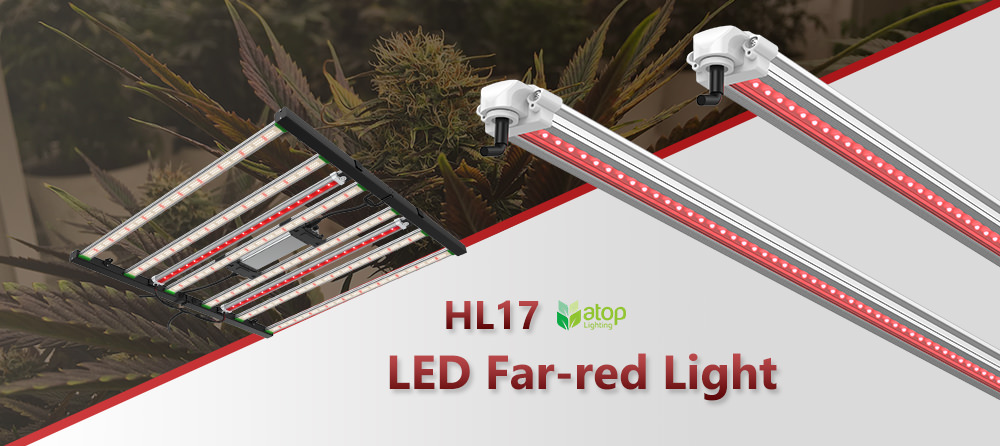
For this reason, the HL17 Horti-UV Pro is offered as a supplemental lighting solution for winter greenhouses. It is available with far-red light at 730 nm to support plant morphology and yield under low-light conditions. In addition, the fixture can be configured with blue (450 nm), green (525 nm), red (660 nm), or UV wavelengths (385 nm, 365 nm), allowing growers to supplement specific wavelengths based on crop type, growth stage, and production goals.
Layout and Coverage
Once you understand your supplemental lighting requirements for winter and have selected the appropriate LED grow lights, the next step is not immediate installation. Before any fixtures are mounted, it is essential to develop a detailed lighting layout. The goal of a lighting plan is to achieve the required PPFD and DLI with the fewest fixtures possible while delivering uniform light distribution across the entire crop area.
Without a proper lighting plan, several common issues can occur:
- Edge zones receive significantly less light than central growing areas
- Hot spots directly beneath fixtures, leading to uneven growth and crop inconsistency
- Shadowing caused by structural elements such as trusses, columns, or hanging systems that may not be obvious during installation
These issues can severely affect crop uniformity, yield, and energy efficiency, particularly in large-scale or commercial greenhouse operations.
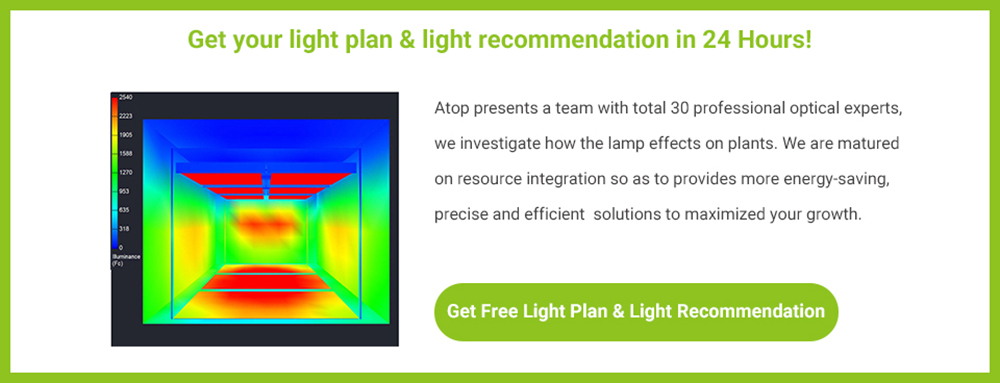
At Atop, we provide professional lighting planning services to address these challenges. Our optical engineering team consists of 30 experienced specialists who have supported greenhouse and indoor farming projects for many years. Through this experience, we understand the leading role that accurate lighting simulation plays in successful crop production.
To ensure precision and reliability, we invest heavily in our optical team and use advanced simulation tools such as AGi32, which offers high-efficiency modeling and highly accurate photometric calculations. In addition, we also utilize DIALux as a complementary lighting design platform to support and validate simulation results. Together, these tools allow us to deliver reliable data, optimized layouts, and predictable lighting performance for our clients.
Monitor Climate Interaction
Most modern greenhouses operate under Controlled Environment Agriculture (CEA) systems to maintain optimal growing conditions throughout the year. In this integrated environment, lighting, temperature, humidity, and airflow are tightly interconnected.
LED grow lights are significantly more energy-efficient than traditional HPS or metal halide fixtures and emit far less radiant heat. While this is an advantage in most seasons, it creates a new challenge in winter. With reduced heat contribution from lighting, the HVAC system must work harder to manage humidity, particularly for dehumidification during cold months.
In winter, plant transpiration combined with limited ventilation in a sealed greenhouse can lead to elevated relative humidity. High RH increases the risk of fungal and bacterial diseases and negatively impacts transpiration and nutrient uptake. Continuous monitoring of air temperature and relative humidity is therefore essential.
If humidity levels rise beyond optimal ranges, you may need to adjust heating and ventilation strategies or invest in dedicated dehumidification solutions. Effective winter climate management is not about minimizing energy use in one system but about balancing lighting, heating, ventilation, and humidity control across the entire greenhouse.
Optimized lighting performance ultimately depends on an optimized climate. When these systems operate in harmony, growers can maintain plant health, achieve consistent growth, and protect yield and profitability throughout the winter season.
__________________________________________________________________________________________________________________________________
Reference
[1] Kim, D., Moon, T., Kwon, S. et al. Supplemental inter-lighting with additional far-red to red and blue light increases the growth and yield of greenhouse sweet peppers (Capsicum annuum L.) in winter. Hortic. Environ. Biotechnol. 64, 83–95 (2023). https://doi.org/10.1007/s13580-022-00450-6