
Tunable Spectrum LEDs are Essential for Diversifying Crop Needs
LED grow lights have continuously evolved to meet the needs of plants and help growers maximize their profits. In the past, LED grow lights offered fixed light intensity and spectrum. Over time, they became dimmable, allowing growers to adjust light intensity as needed. The light spectrum has also advanced, from the early purple LEDs to today’s full-spectrum designs that include UV and far-red wavelengths.
Now, the controlled environment agriculture (CEA) industry is diversifying faster than ever. What happens when consumer demand shifts from lettuce to basil, or when new research reveals a more effective light recipe for enhancing potency?
Modern commercial cultivation requires flexible lighting systems capable of adjusting both light spectrum and intensity to optimize yields. That’s exactly what tunable spectrum LED grow lights deliver.
In this blog, we'll explore why tunable spectrum technology has become essential for diversified growing operations.
The Evolution of Commercial Growing Operations
Commercial indoor farming has changed dramatically. Today’s leading growers are defined by flexibility and high-value crop diversity. This shift is driven by both market demand and rapid advances in Controlled Environment Agriculture (CEA). The global CEA market is expected to reach $271 billion by 2032 [1], reflecting a move beyond staple crops like lettuce and tomatoes toward specialty herbs, nutraceuticals, and unique flavor varieties.
This growth is not only about better technology. It is also about adapting to market forces that reward versatility. A global meta-analysis of diversified farming systems, encompassing 119 peer-reviewed studies, shows that diversified operations are at least as profitable as simplified systems, often achieving higher total gross income [2]. The economic rationale is clear: diversification reduces revenue volatility while unlocking premium market opportunities unavailable to monoculture operations.
For growers, this evolution means the ability to deploy diverse, optimized light strategies simultaneously within a single facility
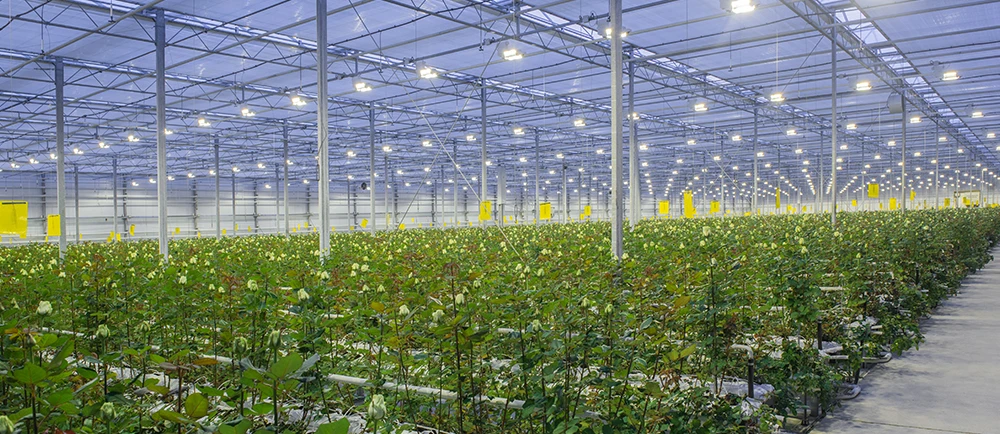
Tunable-Spectrum LED Grow Lights Meet Diverse Plant Needs
Not all crops respond to light in the same way. Each species has unique photoreceptors that determine how it reacts to different wavelengths, so the ideal light spectrum varies by crop and growing conditions.
For example, butterhead lettuce grows best with a daily light integral (DLI) of about 14–16 mol/m²/day, under red and blue light at a 3:1 ratio. In contrast, warm-season vine crops such as tomatoes, cucumbers, and peppers need much higher DLIs of 20–30 mol/m²/day to reach full productivity.
Even among commercial goals, lighting needs differ. Leafy greens require more blue light to stay compact and market-ready, while medicinal herbs often benefit from controlled amounts of far-red light to boost biomass and compound production.
So how can growers meet such diverse lighting needs?
Tunable-spectrum LED grow lights make it possible to meet these diverse needs. Growers can precisely adjust both light spectrum and intensity, tailoring “light recipes” for each crop or growth stage.
How Tunable Spectrum LED Grow Lights Work
Tunable-spectrum LED grow lights feature multiple independent control channels that allow growers to easily adjust both light spectrum and intensity. These fixtures cover the full range of wavelengths essential for plant growth, typically from deep blue (around 380 nm) to far-red (up to 780 nm).
The key advantage is independent control of the light spectrum. This enables precise, targeted lighting strategies that influence plant morphology, growth rate, and flowering. Tunable spectrums can be achieved in several ways, including combining LEDs of different colors or using dynamic spectral control systems with filters or sensors that adjust the spectrum in real time.
Dimming control adds another layer of customization. By adjusting light intensity, growers can fine-tune lighting for different plant types, growth stages, and production goals.
Commercial tunable systems typically offer 2 to 4 control channels. Two-channel systems often include supplemental far-red, UV, or green light, while four-channel systems provide greater flexibility for complex lighting recipes.
For example, our Horti-UV Pro serves as an ideal supplemental fixture for multi-bar grow lights in cannabis cultivation. Adding UV light can improve growth rates, enhance THC production, and reduce plant pathogens.
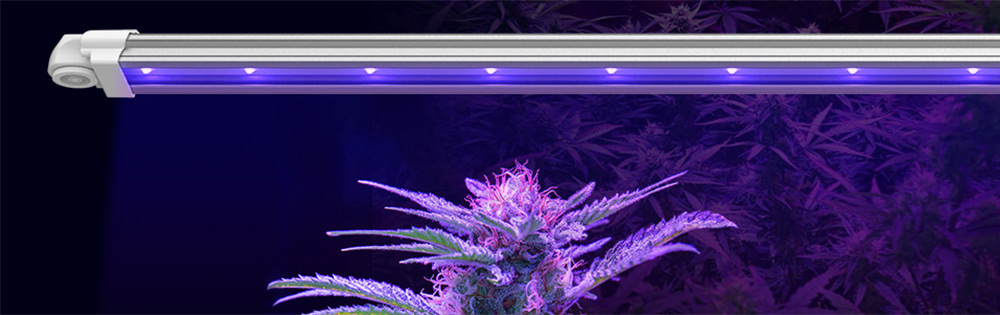
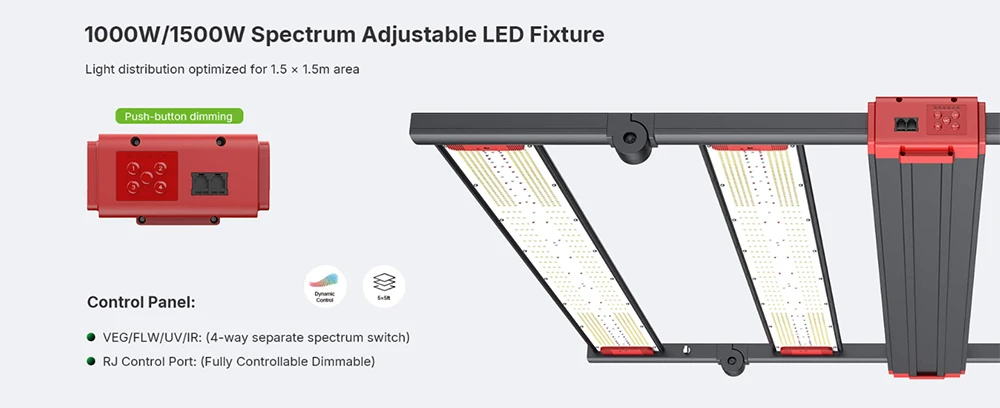
Our Horti-Rock features a four-channel spectrum designed for both vegetative and flowering stages, with optional UV and IR enhancement for optimal plant performance.
Tunable-spectrum fixtures often include intuitive control panels or interfaces for setting light intensity, spectrum, and scheduling by growth stage. The Horti-Rock, for example, features a convenient push-button interface for easy dimming and spectrum control.
At Atop, we provide custom design services, and we are a trusted OEM/ODM partner for growers and horticulture lighting distributors worldwide.
Ready to create your custom light strategy?
Schedule a complimentary light recipe consultation with our expert team and design the optimal lighting plan for your crops.
Sources
[1] DataM Intelligence. (2024). Controlled Environment Agriculture Market Size, Report 2032.
[2] ScienceDirect - "Financial profitability of diversified farming systems: A global meta-analysis" (2022)