
Tips for Successful Indoor Pea Growing
From cooking as a side to using fresh in salads, peas add sweetness to all kinds of meals. If you are beginning growers and want to taste the peas of your labor, but worry about difficulties, you can put considerations out of the question. With a bit of work, you can harvest the fresh and sweet peas. In general, peas are grown in outdoor gardens.
Peas are cool-weather plants. They grow better in early spring. But there is insufficient sunlight in your gardens during cool weather. With advanced LED technology, growers are also able to grow peas indoors or at home. Indoor peas are advantageous to save space and control the growing environment more precisely. Here, we have some tips to help you achieve a successful indoor pea growing.
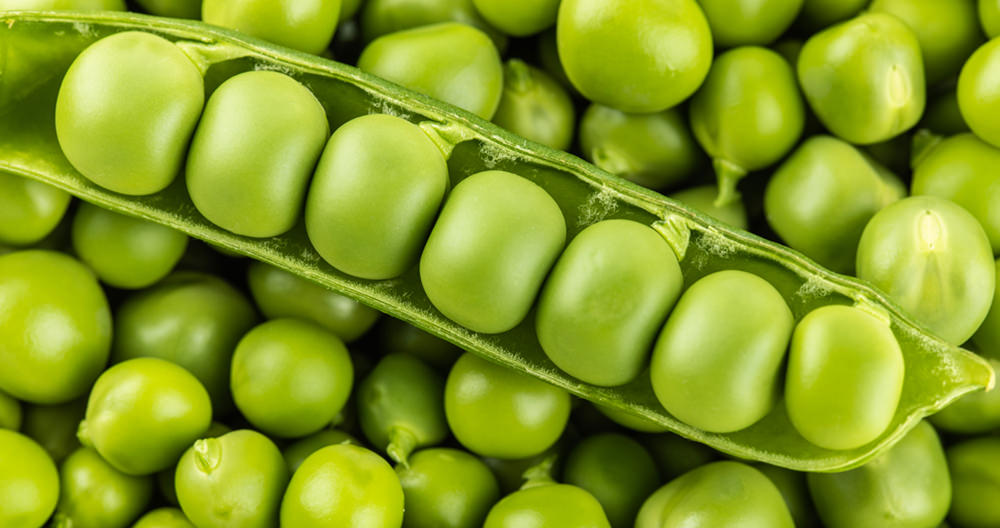
Basic information about peas
|
Name |
Peas |
|
Light |
More than 6 hours of full sun or DLI≧ 18 mol/m2/day |
|
Soil |
Well-darning and fertile |
|
Care |
Beginner-friendly |
|
Temperature |
Cool weather (10 - 20 ℃) |
|
Time for harvest |
55 - 70 days |
Choose the best pea varieties that suit your needs
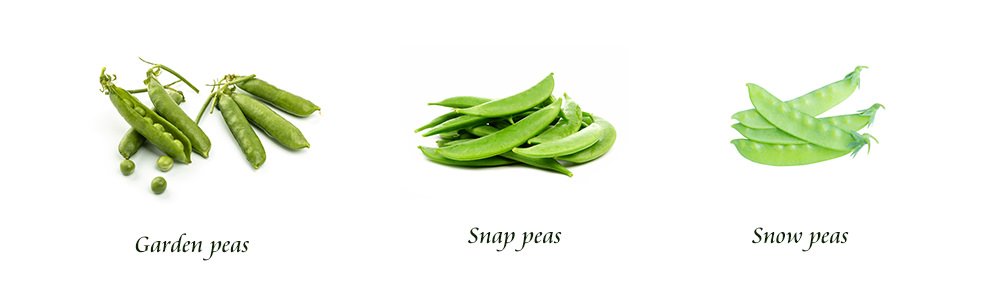
Different varieties of peas are of different appearances and tastes. You should choose the peas that suit you best. There are three types of peas: garden peas, snap peas, and snow peas.
Garden peas, also called English or green peas. People usually shell the pod and eat the sweet, round seeds inside the pod. If you grow garden peas, you will need to harvest and shell a large number of pods for your dishes. When the pod has filled out and peas are recognizable through the pod, it is time to pick the peas.
Snap peas are also called sugar snap peas. The snap pea has rounded and edible pods. Unlike garden peas, the entire snap peas are edible. Thus, if you don’t like picking and shelling peas, snap peas may be your best choice.
Snow peas have flat and edible pods. Pods are tender and crispy, while seeds are sweet and plump. Harvest snow peas when the pods are green and tender. Once the pods turn yellow, the snow peas are toughening and aging.
When to start the plant
Peas are cool-season crops, so they grow well with temperatures of 10 to 20℃. They cannot grow well in summer. The hot weather will make peas grow more slowly or even kill them. To fit the cool temperature for peas, you had better plant peas in early spring and late fall. But the warmer weather and shorter days in fall may cause slower growth, diseases, and poor pollination. Therefore, the best time for planting peas is early spring.
Things to get started with indoor peas
Here are things you need for pea plants:
- Pea seeds
- pots
- Potting mix for organic vegetables
- LED grow lights (such as our HL26 Horti-Drone) that can give the equivalent of 6 hours or more of full sunlight.
How to grow pea plants
Peas are best started from seeds. Just sow seeds in potting mix about 1 inch in depth. Then water the seeds and keep the soil moist. About 7-14 days later, sprouts will appear. If you still cannot see seedlings in 14 days, the setup may be too cold. Please note that the setup temperature cannot be lower than 5℃.
When seedlings appear, give some support to your indoor peas. Use a trellis or a wire system to train vines vertically and out of the dirt. Place your seedlings under LED grow lights if there is insufficient lighting in your indoor spaces.
To promote branching, pinch off the tops when the shoots are about 15cm tall. You can also pinch off the main stem above the 5th branch when the shoots have 5 branches and a growing tip.
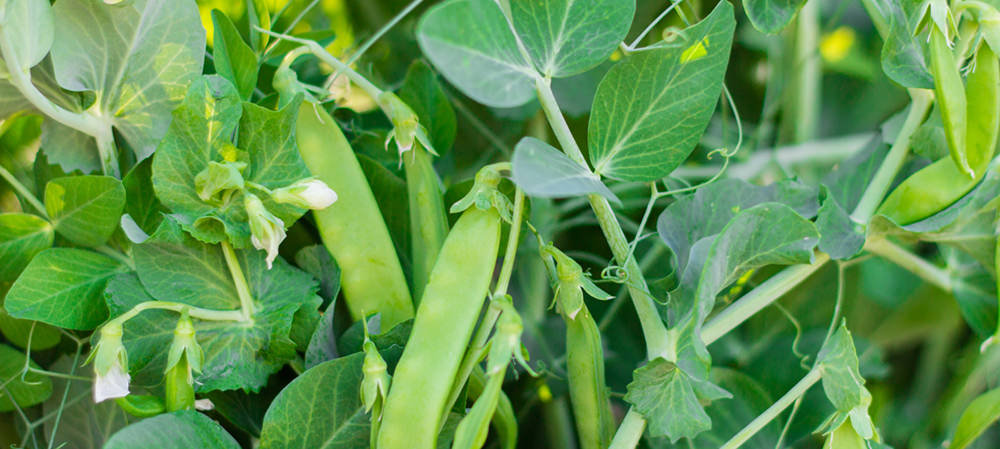
You may worry about the pollination of indoor plants. Don’t worry. Peas are self-pollinating, so there is no need to take plants outdoors for pollination.
Provide sufficient lighting
Many growers may be new to using LED grow lights to grow peas indoors. Providing sufficient lighting for your indoor plants is critical. Peas are day-neutral plants. It is recommended to leave grow lights on for 12 hours or more per day if your indoor grow room lacks sunlight.
Some growers watch the electricity bill too closely, so they only let LED grow lights on for a few hours. But this not only wastes energy but also causes poor lighting effects.
Apart from lighting periods, the spectrum and light intensity are also important for better growth of indoor peas. Full-spectrum LED grow lights are the best choices because they can promote photosynthesis and balance growth. A DLI of 18 mol/m2/day or more can provide the equivalent of more than 6 hours of direct sunlight to help peas grow their best.
Still confused about the lighting for indoor peas? Contact our horticulture lighting expert now!
How to harvest peas
Peas taste best when picked immediately before cooking. They are at the peak sugar stage for a short time. Storage makes sugars convert to starches and thus lose their sweet and fresh flavor. Therefore, the major rule for harvest is - harvest often! Frequent harvesting not only provides peak flavor but also promotes continued flowering and production.
Please note, don’t damage the vine during harvesting. Otherwise, it might reduce productivity. If you grow garden peas, harvest when they are firm but succulent. For snap peas, pick them when the pods are round and crisp. When it comes to snow peas, harvest them when the swelling seeds become evident within the pod.