
How Much Light Does a Vanilla Orchid Need?
Vanilla is a vining orchid native to Mexico and is considered one of the most prized spices in the world. It is primarily cultivated for commercial purposes, especially for its distinctive flavor and fragrance widely used in the food and cosmetic industries.
Unlike many orchid species that thrive in bright, direct sunlight, vanilla orchids have adapted to the dappled light, where they receive strong but filtered sunlight throughout the day.
As a result, vanilla orchids require carefully managed lighting conditions to support healthy, vigorous growth and successful flowering.
So, how much light does a vanilla orchid actually need?
How much light does vanilla need?
Figuring out the right amount of light for vanilla plants can be tricky. It’s not just about how bright the light is, it also depends on the spectrum of light and how long the plant gets it each day.
Researchers have studied how different light levels affect Vanilla planifolia. In one study, vanilla seedlings were grown under four different light conditions: 8%, 17%, 31%, and 67%. The results showed that too much light (like the 67% level) actually stressed the plants, slowing down photosynthesis and growth. On the other hand, very low light (8%) didn’t harm the plants much, especially when it came to their special way of photosynthesis (called CAM). The best growth and photosynthesis happened under moderate light levels.
This makes sense because vanilla orchids are naturally shade-loving plants. They don’t do well under direct, harsh sunlight. Another study looked at how light affects the plant’s chlorophyll fluorescence. It found that plants under high light intensity had reduced Chl F values compared to those under low light, further highlighting the plant's sensitivity to excessive light.
In general, vanilla grows best with filtered light, not direct light, but not total shade either. A good range for indoor or greenhouse growing is 200 to 400 µmol/m²/s of light, which mimics the light conditions under tree canopies in the wild.
Light quality (or spectrum) also matters. For example, blue light affects the color of the leaves and helps move chloroplasts inside the plant cells. It also helps vanilla plants protect themselves when the light is too strong. Red light, on the other hand, doesn’t trigger the same responses. So, blue light plays an important role in helping vanilla handle bright light.
For growers, using full-spectrum LED grow lights is a great option. These lights provide all the wavelengths of natural sunlight, supporting strong and healthy growth throughout the plant’s life.
Finally, when growing vanilla indoors, the length of time the lights are on each day matters too. Try to keep the lights on for 12 to 14 hours a day to imitate the natural day length in tropical regions where vanilla grows best.
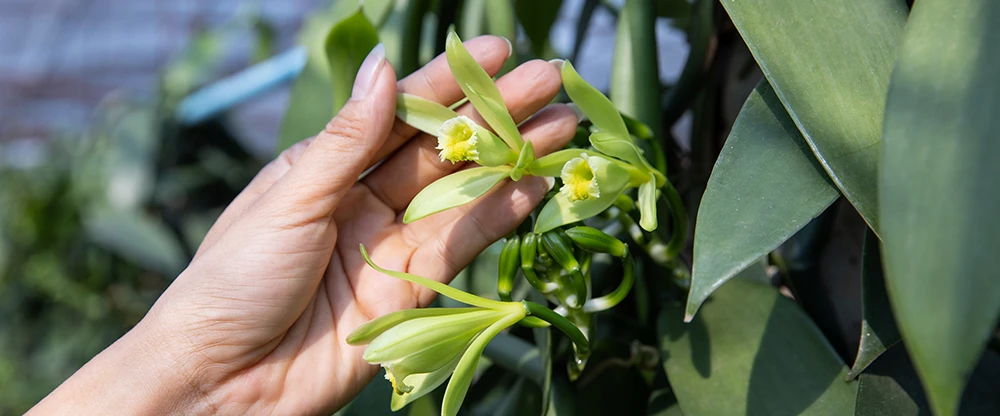
Common myths about vanilla orchid lighting
All orchids need deep shade
Think “bright shade” rather than “deep shade.”
While it’s true that vanilla orchids don’t tolerate direct, scorching sunlight, they actually require bright, filtered light to thrive and produce beans.
More light is better for vanilla orchid
More does not mean better. Too much lighting will cause sunburn, stunted growth, reddish/purple tints, and dehydration.
A regular lamp provides enough light
Regular household lighting is inadequate for vanilla orchids. It requires a balanced light spectrum and intensity akin to natural daylight, especially during their active growing and blooming periods.
FAQ
How do I know if my vanilla is happy with its light?
If your vanilla leaves stay a clear emerald green, new shoots form regularly, and the distance between leaves remains around 5 to 10 cm, it is happy with the light. Leggy stems or sunburned patches signal light that’s too weak or too strong.
My vanilla has reverted to plain green. Is it a light issue?
Insufficient, bright, indirect light often causes variegated orchids to switch to all-green foliage. If it’s a genetic reversion, however, no increase in light will restore the pattern.
Should I move my vanilla orchid outdoors?
Only when nights stay above 15 °C and days remain below 30°C. Provide 4 to 6 hours of filtered sunlight, protect it from harsh midday rays, inspect for pests daily, and re-acclimate it indoors before cooler weather returns.