
How to Light Olive Trees in Commercial Office Spaces
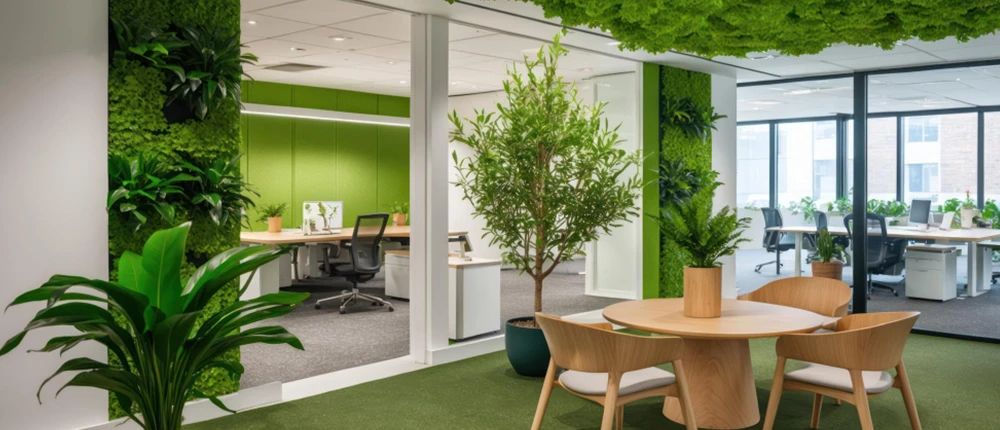
Biophilic design is gaining traction in commercial office spaces. Bringing natural elements indoors helps create environments that feel more welcoming, improve well-being, and even boost productivity.
Among the many plants used in biophilic design, olive trees are a favorite. Their silvery-green, leathery leaves add a timeless elegance, and they carry powerful symbolism, peace, wisdom, and longevity.
But while olive trees look right in the office spaces, they’re native to the sunny Mediterranean and naturally crave bright, direct light. That can be a challenge in many commercial spaces, where natural lighting is often limited.
So how do you keep olive trees happy and healthy indoors?
How Much Light Does an Olive Tree Need?
To keep olive trees healthy and visually appealing in commercial office spaces, it is important to understand their natural light requirements.
Olive trees are native to the Mediterranean, where they enjoy abundant sunlight, typically over 2,000 hours of direct sun each year. This translates to at least 6 hours of direct sunlight per day. Olive trees thrive in full, direct sunlight and, unfortunately, they do not do well in low-light environments.
A DLI (Daily Light Integral) of around 14 to 20 mol·m⁻²·day⁻¹ supports lush foliage and can even encourage occasional flowering. If light levels drop below 8 mol· m⁻²·day⁻¹, the tree may begin to show signs of stress, such as yellowing leaves and weakened branches.
How to Light Olive Trees in a Commercial Office
As mentioned earlier, olive trees typically need a Daily Light Integral (DLI) of 14 to 20 mol·m⁻²·day⁻¹ to maintain dense foliage and encourage occasional flowering. However, in commercial offices where the trees are used mainly for decoration, a DLI of around 10 mol·m⁻²·day⁻¹ is usually enough. This level of light can support healthy, dark-green leaves and a compact growth habit.
In many indoor offices, natural light alone may not provide adequate exposure. Star by positioning your olive tree near the brightest natural light source available. South-facing windows are ideal, but east- or west-facing windows can also work.
Still, not every office has large windows or enough flexibility to place trees close to them. In some designs, olive trees are intentionally placed in corners or central spaces where natural light is limited. In these cases, supplemental lighting becomes essential to keep the trees healthy and visually appealing.
Can You Grow an Olive Tree with a Grow Light?
Absolutely.
Grow lights are a great way to support olive tree growth indoors when natural light is insufficient. Olive trees respond best to blue and red light spectra, which are important for photosynthesis and chlorophyll production. However, the bluish or purplish glow from these lights can be uncomfortable for people and may affect the atmosphere of the workspace.
To balance plant needs with human comfort, full-spectrum white LED grow lights are the best choice. They provide the wavelengths necessary for healthy olive tree growth while producing a natural-looking white light that is easier on the eyes.
Tips for Installing and Using Grow Lights
Positioning the lights directly above the plant is a common way to grow light installation. This allows the light to reach the canopy evenly. But always follow the manufacturer's guidelines for the recommended distance between the light and the plant. If the lights are placed too close, they can cause leaf burn and stress the tree.
Since these lights are part of an indoor workspace, consider how they affect the overall comfort of the environment. Bright or harsh lighting can cause glare or visual discomfort for employees. To address this, you can angle the lights away from direct lines of sight or schedule them to operate mainly outside of peak working hours, such as early in the morning or later in the evening.
The duration of lighting is just as important as placement. To support healthy growth, olive trees should receive around 10 to 12 hours of light each day. This artificial schedule helps replicate the natural rhythm of daylight. For best results, you can also adjust the lighting duration throughout the year to reflect seasonal changes, promoting a more natural growth cycle indoors.
Care for Indoor Olive Trees
To keep olive trees healthy and thriving in a commercial office, proper care goes beyond just lighting. These trees need the right soil, water, temperature, and maintenance to adapt well to indoor environments.
Start with a well-draining soil mix. Olive trees do not tolerate soggy roots, so always plant them in containers with drainage holes. Allow the top 2 to 3 inches of soil to dry out completely between waterings to avoid root rot.
Olive trees are relatively tolerant of indoor conditions, but they still prefer a consistent temperature between 50 and 85°F (10 to 29°C). Although they handle airflow better than many indoor plants, it’s best to keep them away from HVAC vents. Moderate humidity levels around 40 to 50 percent can also help prevent leaf drying and promote overall plant health.
Regular feeding is important, especially under artificial lighting. Apply a balanced, slow-release fertilizer once a month to support steady growth and keep foliage vibrant.
Lastly, don’t overlook the importance of pruning. Pruning helps improve air circulation within the canopy and ensures light can reach the inner branches. It also encourages a tidy shape and prevents overcrowding. Be sure to remove any dead or yellowing leaves promptly to maintain a clean, healthy appearance.