
How to Light Indoor Kohlrabi
Kohlrabi has been winning over home cooks with its quirky, round stem and crisp, slightly sweet flavor. Kohlrabi microgreens are also delicious. But here’s the fun part: you can grow it indoors, too!
Unlike common indoor crops such as lettuce and herbs, which compete in crowded markets, kohlrabi stands out. It grows pretty quickly, and it can even bring in a higher value if you’re selling your harvest.
However, success depends heavily on proper lighting. Without the right lighting, kohlrabi plants get leggy, lose their bright color, and produce tiny bulbs that just don’t deliver.
In this post, we’ll explore the lighting needs for kohlrabi’s growth. That way, you can enjoy fresh, crunchy microgreens and bulbs year-round.
Lighting Strategies for Indoor Kohlrabi Microgreens
Growing kohlrabi microgreens indoors is generally easier than cultivating bulb kohlrabi. Several studies have explored optimal indoor lighting for these microgreens. White LED grow lights are commonly used, and supplementing them with far-red light can promote taller growth.
Seedlings should be exposed to a photoperiod of 14 to 16 hours per day, providing consistent light for healthy development. The Daily Light Integral (DLI) is approximately 6 to 12 mol·m⁻²·day⁻¹. Using higher light intensities encourages the development of robust, compact tissue, rather than merely expanding the leaf surface area.
Light Spectrum for Kohlrabi Microgreens
A 2022 Sustainability study examined how adding UVA or far-red (FR) light to white LEDs influences growth and nutritional quality [1]. The researchers found that while UVA had almost no effect, adding FR light increased plant height by about 9% in kohlrabi (and up to 18% in basil and cabbage).
However, this vertical growth came at a cost: adding FR reduced fresh and dry biomass (i.e., overall yield) as well as total phenolic content and antioxidant levels in some species. Interestingly, there was no interaction effect between UVA and FR on any of these traits—meaning their effects acted independently.
What this means for growers: If you’re aiming for taller, more easily harvestable kohlrabi microgreens, a touch of FR might help. But if your goal is maximum yield or nutritional value, it may be better to stick with standard white LED lighting. Adding UVA or FR offers modest benefits but could compromise other important qualities like volume and antioxidant richness.
Light Intensity for Kohlrabi Microgreens
A 2016 study by Gerovac and colleagues (USDA-ARS) looked at how different light intensities (6, 12, 18 mol·m⁻²·d⁻¹) and light spectra (red-green-blue, red-blue, red-far-red-blue) affect kohlrabi’s growth and form [2].
Here’s what they found: As light intensity increases, hypocotyls (stems) shorten while dry weight rises, and leaf area shrinks. Leaf greenness (relative chlorophyll content) also increases at higher light, meaning the microgreens look more vibrant. Interestingly, under lower light levels, kohlrabi showed higher nutrient concentrations overall, regardless of the light spectrum used.
That means growers can choose light settings to suit their goals: brighter light for compact, lush, and visually rich microgreens, or lower light if maximizing nutrient content is the priority.
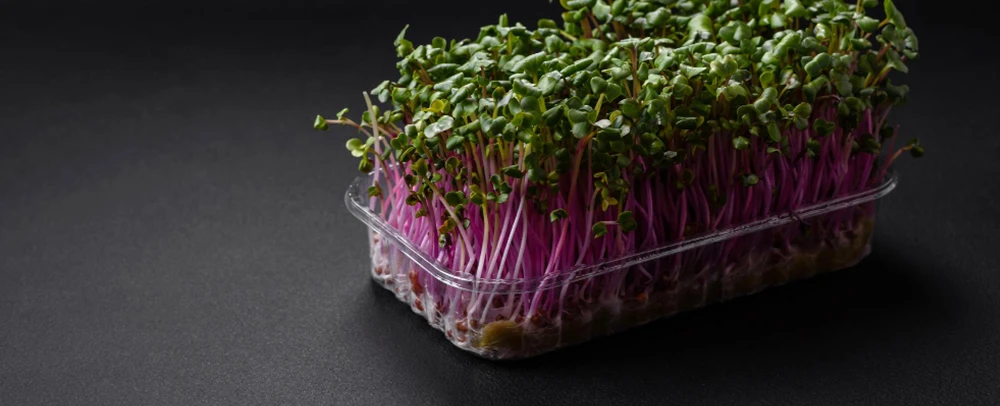
Requirements to Grow Indoor Kohlrabi Bulbs
Growing kohlrabi bulbs indoors is also possible. Although there is limited research on lighting for mature kohlrabi plants in indoor environments, many growers have successfully cultivated bulbs indoors. Here are some key considerations for growing kohlrabi indoors.
Choosing the Right Kohlrabi Cultivar for Indoor Growing
While lighting is essential for a successful harvest, a plant’s genetics determine how it responds to light and how well it adapts to indoor conditions.
Some cultivars are bred for large outdoor production. For example, Superchmelz can produce bulbs weighing up to 20 pounds, a remarkable achievement in the field, but impractical in a limited indoor space.
When growing under artificial light, it’s best to choose varieties that mature quickly, remain compact, and produce tender bulbs without excessive foliage that crowds your setup.
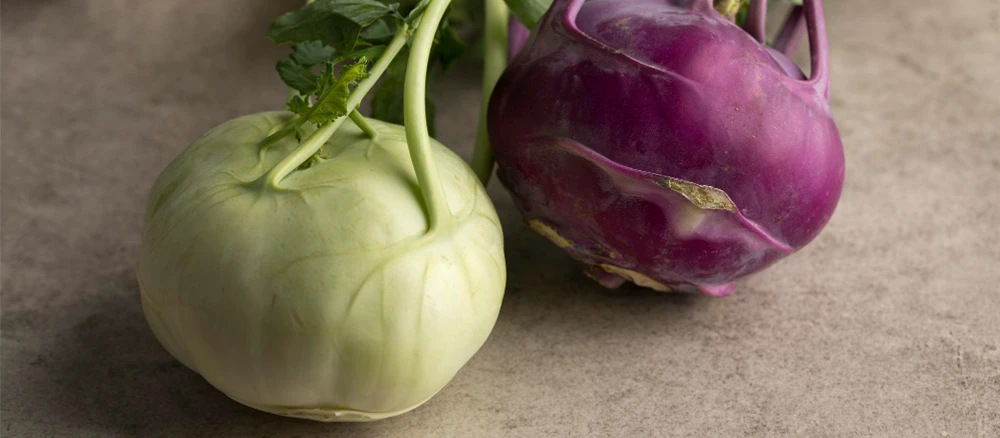
A classic option is Early White Vienna, which matures in 45–60 days and offers a mild flavor. For a purple kohlrabi, try Early Purple Vienna or Azur Star, both of which have attractive purple skins and perform well indoors.
Kohlrabi’s Unique Growth Cycle and Lighting Needs
Kohlrabi (Brassica oleracea var. gongylodes) is a cool-weather crop that thrives in temperatures between 15–24 °C (60–75 °F). Outdoors, it requires at least 6 hours of full sun daily.
Unlike tomatoes, which continuously produce fruit, or lettuce, which simply adds new leaves, kohlrabi develops its edible globe by swelling the stem just above the soil line.
During the initial vegetative phase (weeks 1–4), kohlrabi behaves much like other brassicas, forming a rosette of leaves through photosynthesis. At this stage, the plant’s energy is directed entirely into building its leaf canopy, which later fuels bulb formation.
Around week 5, the transformation begins: the stem between the soil line and the first set of leaves starts to swell, forming the characteristic bulb.
This unique growth pattern creates specific lighting needs at different stages. As the bulb develops, light must penetrate down to the stem, not just the leaves. If the canopy becomes too dense, it can shade the very part you intend to harvest. For best results, ensure even light coverage from above and slightly from the sides to prevent leaning and to promote uniform bulb development.
Lighting Strategies for Indoor Kohlrabi
The “full sun” requirement of mature kohlrabi translates to a relatively high Daily Light Integral (DLI) of 15 to 25 mol·m⁻²·day⁻¹, which supports the energy demands of bulbous stem development. The recommended photoperiod is 14 to 16 hours per day to ensure optimal growth.
For the light spectrum, full-spectrum LED grow lights with a higher proportion of red light are particularly effective for promoting healthy indoor growth of kohlrabi. This combination of intensity, duration, and spectrum helps the plants develop strong bulbs and maintain robust overall growth.
Whether you want to grow kohlrabi microgreens or bulbs in indoor farms, we offer tailored lighting solutions to meet your needs. Contact us to learn more.
Reference
- Cowden, R.J.; Markussen, B.; Ghaley, B.B.; Henriksen, C.B. (2024). The Effects of Light Spectrum and Intensity, Seeding Density, and Fertilization on Biomass, Morphology, and Resource Use Efficiency in Three Species of Brassicaceae Microgreens. Plants, 13, 124.
- Gerovac J.R., Craver J.K., Boldt J.K., & Lopez R.G. (2016). Light Intensity and Quality from Sole-source LEDs Impact Growth, Morphology, and Nutrient Content of Brassica Microgreens. HortScience, 51(5), 497–503.