
How LED Light Influences Cowpea Quality and Yield
Cowpea is traditionally cultivated in open fields and is valued as a resilient, protein-rich legume. It forms a major part of the daily diet for millions of people across Africa, Asia, Central America, South America, etc. In fact, demand for cowpea is expected to rise in the coming years.
Meanwhile, advanced Controlled Environment Agriculture (CEA) has become widely adopted in greenhouses and vertical farms for crops such as tomatoes, strawberries, cucumbers, and even cannabis. These systems allow for precise control of factors like temperature, humidity, and most importantly, light.
Although cowpea has not yet been widely produced indoors on a commercial scale, researchers have conducted numerous studies on how artificial lighting, particularly LED grow lights, affects its growth, quality, and yield. These studies aim to make indoor cultivation of cowpea more efficient.
Let’s explore how LED lighting influences cowpea quality and yield.
Cowpea biology and light requirements
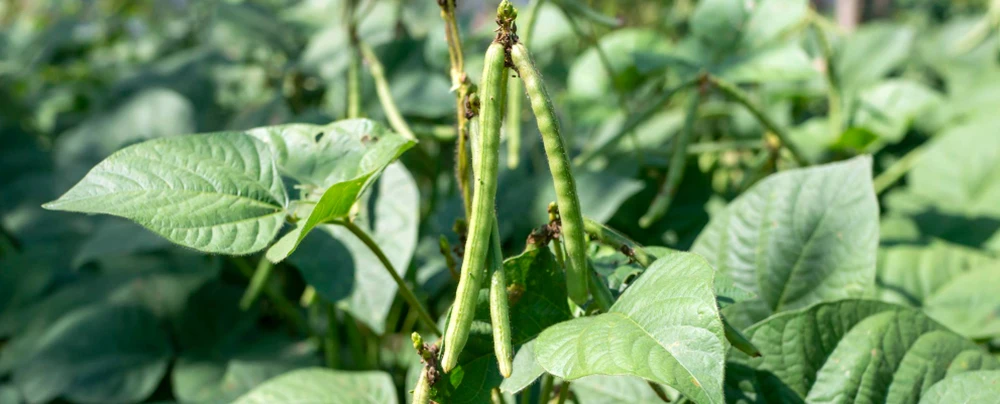
Cowpea (Vigna unguiculata) is a resilient, warm-season legume widely cultivated for its protein-rich seeds and tender leaves. It thrives in tropical and subtropical climates, with the ability to withstand high temperatures and moderate water stress.
In terms of light requirements, cowpea performs best under full sun, needing at least six hours of direct sunlight each day to grow and produce optimally. While the plant can tolerate partial shade, reduced light typically leads to decreased flowering and lower pod yields. Thus, full sunlight remains the key to achieving maximum growth and productivity.
Impact of LED Light Spectrum on Cowpea Nutritional Profile and Bean Weevil Control
A study in Natural Product Communications explored how different LED light colors affect the nutritional profile of cowpea sprouts [1].
Researchers exposed sprouts to various light treatments and analyzed their primary and secondary metabolites, which include sugars, amino acids, and health-promoting compounds such as antioxidants. They found that light quality significantly influenced the sprouts’ biochemical makeup, with certain wavelengths enhancing beneficial compounds more than others. These findings suggest that LED lighting can be used not just for efficient plant growth, but also to optimize the nutritional value of sprouts for functional foods and controlled agriculture.
A study in the IOP Conference Series: Earth and Environmental Science looked at how different light colors affect the bean weevil (Callosobruchus maculatus), a pest notorious for destroying stored cowpeas [2].
The researchers found that white, blue, and red light were actually lethal to the insects, significantly increasing their mortality. This suggests that these light spectra could serve as an eco-friendly, non-chemical method for protecting stored beans. The study highlights light as a promising alternative to pesticides, while also noting that more research is needed to understand its effects on weevil eggs and larvae.
LED Light Enhances Cowpea Microgreen Nutrient Content
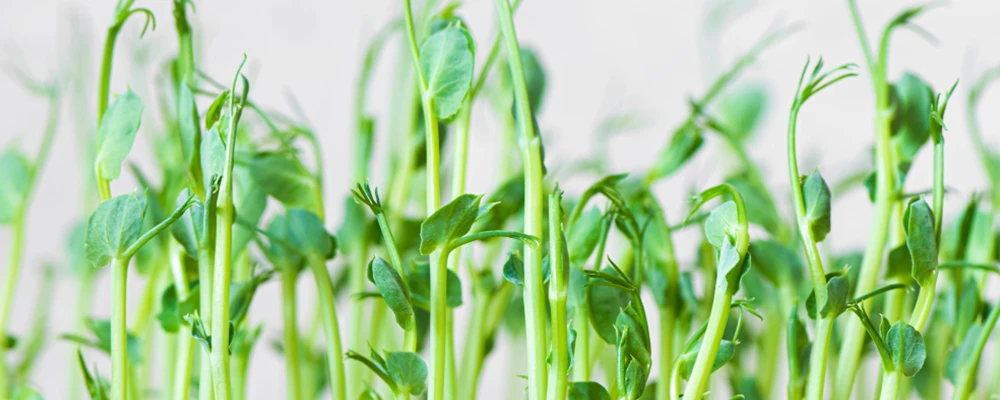
A study in Jurnal Biologi Tropis investigated how different LED light intensities and growing media affect cowpea microgreens [3].
Researchers tested five light levels (3000–6000 lux) and two media, rockwool and vermicompost, measuring growth traits like plant height, germination rate, and fresh weight. They found that both light intensity and medium significantly influenced microgreen growth. The optimal combination was 5000 lux with rockwool, which produced the tallest plants, highest germination, and greatest fresh weight. These results suggest that carefully adjusting light conditions and growth substrate can maximize microgreen yield, offering practical guidance for urban farming and sustainable agriculture.
Inter-canopy Lighting Optimizes Cowpea Productivity
A study published in the Journal of the American Society for Horticultural Science explored how intracanopy lighting affects cowpea (Vigna unguiculata) canopies [4].
Researchers found that traditional overhead lighting caused a significant decline in light intensity within the canopy, leading to reduced photosynthesis and earlier leaf senescence. In contrast, intracanopy lighting maintained consistent light levels throughout the canopy, delaying leaf aging by 27 days and enhancing overall productivity. This approach not only improved light use efficiency but also doubled the edible biomass produced per unit of electrical energy consumed, highlighting its potential for sustainable crop cultivation in controlled environments.
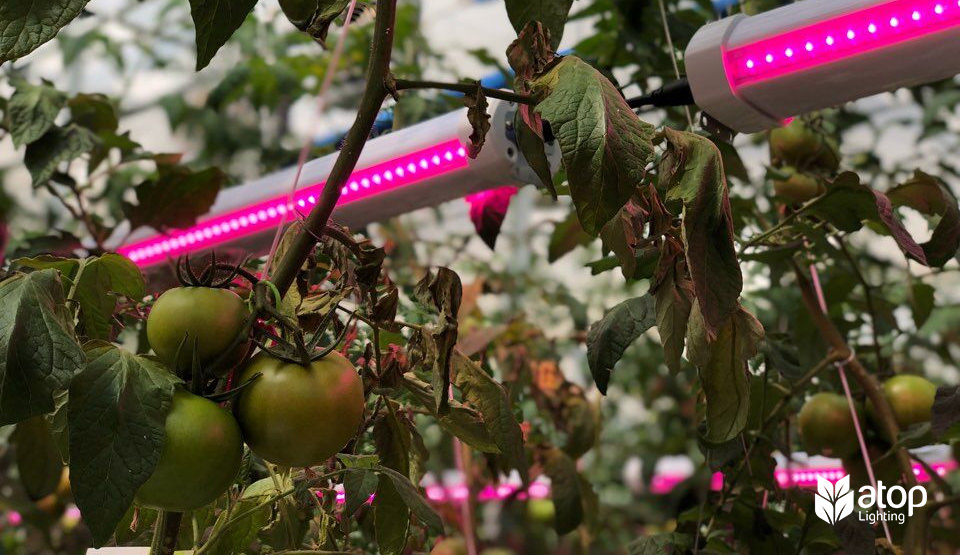
Inter-canopy lighting is widely used in vine crops such as tomatoes and cucumbers because it penetrates deeper into the lower canopy, enhancing photosynthesis and boosting overall productivity and yields.
Our Horti-Reina is a linkable LED interlight solution designed specifically for vine crops. It emits light sideways across a 120-degree range, ensuring uniform illumination of the lower leaves in commercial greenhouses. By keeping lower leaves well-lit, Horti-Reina improves photosynthesis efficiency and helps maximize crop yield.
Reference
[1] Yeo, H. J., Park, C. H., & Park, Y. E. (2018). Metabolic analysis of Vigna unguiculata sprouts exposed to different light-emitting diodes. Natural Product Communications, 13(1), 19–24. https://doi.org/10.1177/1934578X1801301029
[2] Okonkwo, C., & Nnadi, F. (2019). Potential of light spectra as a control of cowpea weevil, Callosobruchus maculatus activity. IOP Conference Series: Earth and Environmental Science, 210(1), 012008. https://doi.org/10.1088/1755-1315/210/1/012008
[3] De Wiliem, S., & Zumani, D. (2025). Growth and yield of cowpea microgreens (Vigna unguiculata L. Walp) under different LED light intensities and growing media. Jurnal Biologi Tropis, 25(3), 2546–2557. https://doi.org/10.29303/jbt.v25i3.9062
[4] Frantz, J. M. (2000). Intracanopy lighting influences radiation capture, productivity, and leaf senescence in cowpea canopies. Journal of the American Society for Horticultural Science, 125(6), 694–700. https://doi.org/10.21273/JASHS.125.6.694