
Impact of Light Stress on Crops and How to Prevent It
In modern commercial crop cultivation, supplemental LED lighting is widely used to enhance photosynthesis, promote growth, and increase yield. However, more light does not always mean better plants. Similarly, insufficient light intensity can also stress plants. Both extremes, too much or too little light, can disrupt physiological processes and lead to light stress.
By the time visible symptoms such as leaf bleaching, curling, or stunted growth appear, significant cellular damage has often already occurred. This leads to direct financial losses through reduced yields, lower crop quality, and longer growth cycles that slow down facility turnover.
So, what exactly is light stress? How can you tell if your plants are experiencing it? And more importantly, how can you prevent it?
What Is Light Stress
Light stress occurs when plants receive either too much or too little light, which disrupts the process of photosynthesis. This imbalance can lead to visible symptoms such as leaf yellowing, bleaching, or reduced growth, indicating that the plant’s energy processes are under strain.
High light stress happens when the light energy absorbed by the plant exceeds its ability to use that energy for photosynthesis. In this situation, the energy input is greater than the rate of carbon assimilation, especially when other essential factors such as carbon dioxide, water, or nutrients are limited. The excess light energy can cause oxidative damage to plant tissues and reduce photosynthetic efficiency.
Low light stress occurs when the light intensity is too low to meet the plant’s metabolic needs. Without sufficient light, the plant cannot generate enough energy through photosynthesis to support normal growth.
Symptoms of Light Stress
How can you tell if your crops are experiencing light stress? Below are some common symptoms to look for. Keep in mind that these signs can easily be confused with other issues such as nutrient deficiencies, temperature stress, or pest damage, so it is important to assess lighting conditions carefully.
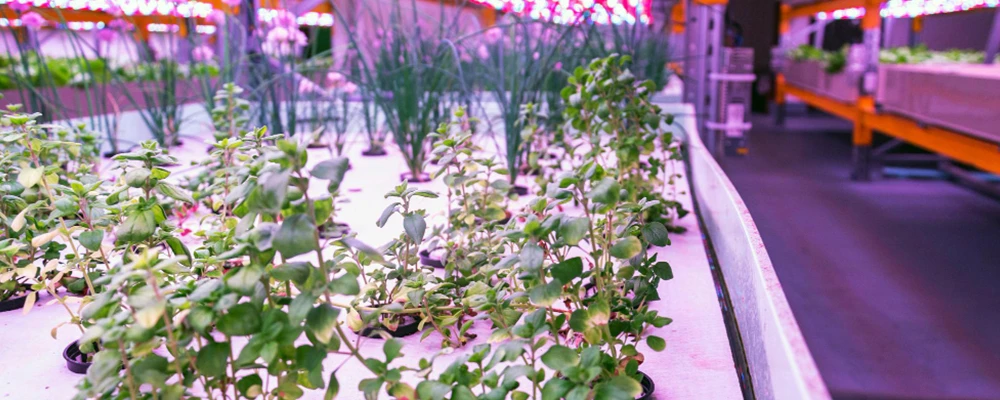
High light stress typically affects the upper leaves that are closest to the light source. Common symptoms include:
- Chlorosis or bleaching: Leaves turn pale yellow or white, indicating damage to chlorophyll and Photosystem II (PSII).
- Necrosis: Brown or dead patches appear on leaf surfaces due to cell damage.
- Leaf curling: Leaves curl inward to reduce light exposure.
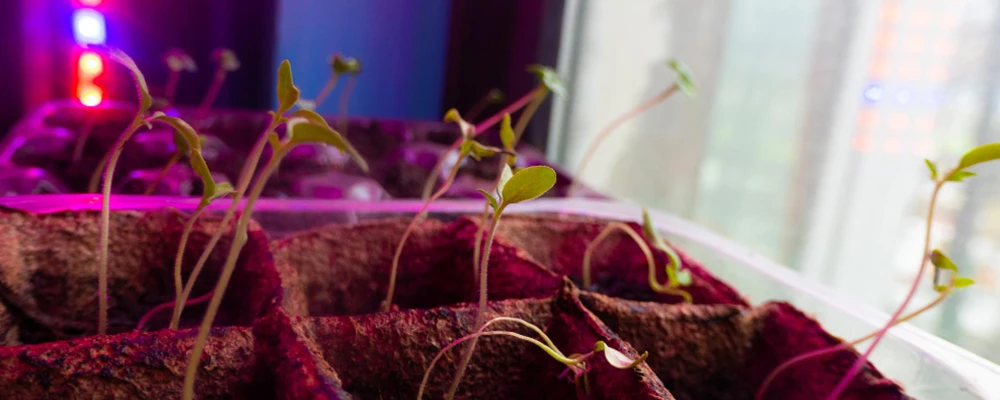
Low light stress often shows up as stretching or weak growth as the plant struggles to capture more light. Typical symptoms include:
- Etiolation: Stems become elongated, thin, and weak, with increased spacing between leaf nodes.
- Lower leaf yellowing and drop: Older, shaded leaves turn yellow and fall off prematurely.
- Reduced overall vigor: The plant reallocates energy to upper leaves and the canopy, sacrificing lower growth to reach available light.
Symptoms vary from crop types. For example, cannabis plants may develop "foxtailing" (irregular bud growth) and experience trichome degradation that reduces potency. Leafy greens become bitter and develop tipburn, reducing marketability. Tomatoes and fruiting crops show blossom-end rot and sun scald on fruits.
Operational and Financial Impacts of Light Stress
Light stress affects crop performance and profitability. It disrupts photosynthesis, damages plant tissues, and reduces yields, directly compromising both productivity and return on investment.
Disrupted Photosynthetic Efficiency
When plants are exposed to either excessive or persistently low light, the functionality of Photosystem II (PSII), the core engine of photosynthesis, becomes impaired. Research published in Photosynthetica (2023) shows that chronic light stress can drastically reduce the maximum quantum yield of PSII, a key measure of photosynthetic efficiency.
As PSII efficiency declines, plants enter a state of photoinhibition, where absorbed light energy exceeds their ability to process it. In this condition, even with higher electricity use and CO₂ supplementation, crops cannot convert resources into usable biomass. The result is a significant drop in the Net Assimilation Rate (NAR), which limits overall yield and productivity.
Degradation of Quality and Secondary Metabolites
For high-value crops, light stress directly affects the production of the compounds that determine market quality. Under photooxidative stress, plants redirect metabolic energy from growth to defense and repair, producing antioxidant enzymes instead of the desired secondary metabolites. This metabolic trade-off reduces the synthesis of essential oils, terpenes, and other high-value compounds, which in turn impacts flavor, aroma, and potency.
According to ScienceDirect (2022), this shift results in lower concentrations of key compounds, while ScienceAsia (2024) reports that prolonged stress weakens plant resilience and increases vulnerability to other environmental challenges. Effective light management is therefore essential to maintain consistent quality and stable production.
Operational and Morphological Costs
Light stress also creates significant operational challenges that increase labor and management costs.
High light stress typically results in stunted growth and thicker leaves, which disrupt harvest scheduling and complicate spatial density planning.
Low light stress often causes plants to stretch, reducing canopy uniformity and making precision irrigation, air circulation, and mechanized harvesting more difficult.
In CEA, these inconsistent growth patterns make it difficult to achieve uniform and repeatable outcomes. Proper and dynamic lighting is critical to achieving both high yields and predictable, manageable plant structures.
How to Prevent Light Stress
Preventing light stress requires an integrated approach that combines proper light levels with precise, dynamic control. With modern LED technology and monitoring tools, growers can effectively manage lighting conditions to minimize stress and achieve high-quality yields.
Optimize Light Intensity and Duration
The foundation of light stress prevention lies in delivering the right amount of light for each crop type and growth stage. Begin by determining the target Daily Light Integral (DLI), which represents the total amount of photosynthetically active radiation (PAR) received by the plant over a 24-hour period.
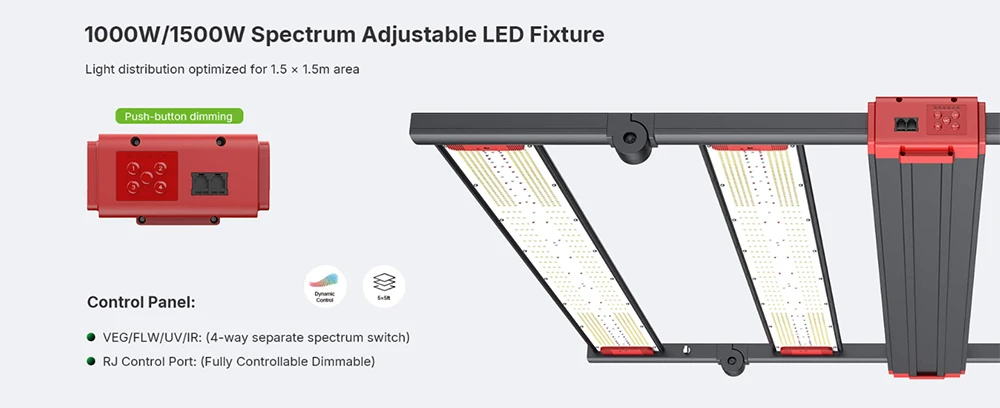
Using LED grow lights with dimming capabilities and programmable controls allows you to adjust light intensity as plants grow and their light requirements change, and compensate for seasonal variations in natural sunlight.
Whenever possible, choose LED systems with variable spectrum control and dimming functions. These features let you modify both the light intensity and spectral composition to match crop-specific needs. For example, the Horti-Rock LED grow light features a four-channel adjustable spectrum switch and full dimming control, offering flexible and precise light management throughout all growth phases.
Strategic Fixture Placement
Proper fixture placement is equally important in preventing light stress. Follow the manufacturer’s recommended mounting height to ensure optimal light distribution. Fixtures placed too close to the canopy may cause localized heat and high-intensity hot spots, while fixtures placed too far reduce uniformity and light efficiency.
Maintain adequate spacing between fixtures to achieve uniform coverage. The overlapping light patterns should create smooth, consistent intensity gradients rather than concentrated beams that can damage plant tissues.
If you need a professional lighting plan that maximizes efficiency while minimizing the number of fixtures required, please contact us. Our lighting experts are ready to design a customized solution to help you achieve optimal performance, energy savings, and consistently high yields.
Environmental Integration
Light does not act alone in determining plant health. Environmental factors such as temperature, humidity, and carbon dioxide levels strongly influence how plants respond to light. Heat buildup, low humidity, or insufficient CO₂ can amplify light stress and further limit photosynthetic performance.
To maintain balance:
- Synchronize HVAC systems with lighting schedules to regulate temperature and humidity.
- Increase air circulation during periods of high light intensity to dissipate excess heat.
- Consider CO₂ enrichment for crops grown under high light levels to improve carbon assimilation and reduce stress.
By optimizing both lighting and environmental conditions, plants can tolerate higher light intensities while maintaining efficient photosynthesis, leading to healthier growth and predictable, high-quality yields.