
How Much Light Do Indoor Crops Need
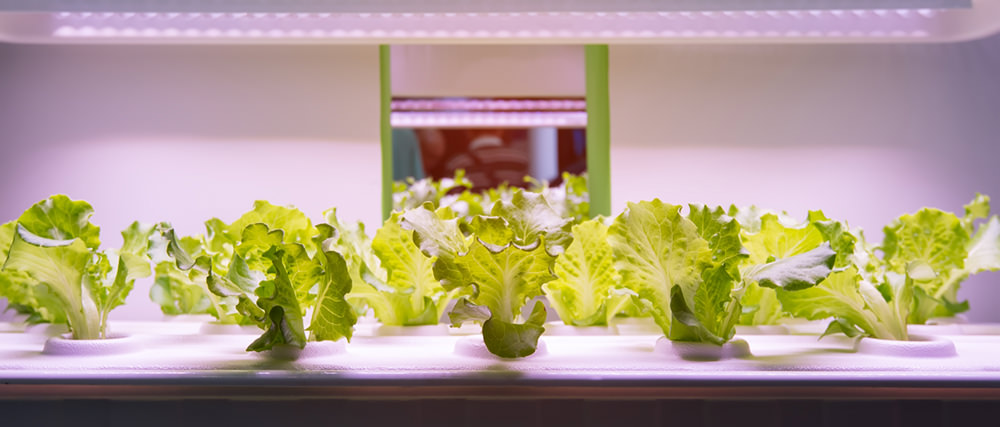
Indoor growing is more and more prevalent for crop production due to climate change and the shortage of arable land. Growers want to reap more profits, achieve higher yields, better crop quality, or more production through indoor growing. No matter which goal growers would like to reach, lighting is one of the most important factors for indoor growing.
Lighting requirements vary from crop types. Neither too much nor too little light will depress yield and quality. Here, we will show you a list of light recipes for some indoor crops, which include lettuces, roses, strawberries, bell peppers, tomatoes, and cucumbers.
 Lettuces
Lettuce is a low-light crop. It requires shorter periods of light, and it can thrive even in shade. But lettuces are leggy and weak without sufficient light. At least 5 hours of direct sunlight is required for growing lettuce outdoors.
For indoor lettuce, LED grow lights are critical. Full-spectrum LED grow lights are ideal for indoor lettuce. PPFD of 100 µMol/m2/s is suitable for the seedling stage, while 100-250 µMol/m2/s is beneficial for the vegetative and mature stage. Increasing DLI (Daily Light Integral) can promote growth and improve aesthetic and nutritional quality. However, excessive DLI should be avoided to prevent tipburn and other disorders.
A light cycle between 12 and 20 hours contributes to the growth of indoor lettuce. If you want round-shaped lettuce with higher planting density, provide a shorter light cycle. In contrast, a longer light cycle will cause slender leaves.
 Roses
Roses
Roses love light. Light level can greatly affect the growth of lateral shoots and the flowering of indoor roses. Dry weights of shoots and roots of roses increased with higher light levels. The same as the length of shoots. But there is no further growth of lateral shoots at a certain light level. Higher light intensity helps to increase the number of flowers under low light conditions.
An average of 12 to 16 hours of light is required for indoor roses.
The ideal PPFD for the seedling stage is between 100 and 300 µMol/m2/s. Vegetation and flowering stage require higher light intensity of 300-600 µMol/m2/s and 600-750 µMol/m2/s, respectively. Flowers and buds of roses are sensitive to heat. Increasing light levels may result in heat stress to roses. Therefore, growers should pay attention to heat protection when growing roses indoors.
Want to get higher prices for roses? Check out the post How to Use LED Grow Lights to Get Higher Rose Market Price.
 Strawberry
Strawberries are a common crop that is grown indoors. They are classified into June-bearing strawberries, Everbearing strawberries, and Day-neutral strawberries, based on their flowering habits. Different species have different light requirements. You can start strawberries from seeds or purchase plants.
A minimum of 8 hours of lighting period under LED grow lights is required for indoor strawberries, while 12 hours to 16 hours of lighting works well for most species of strawberries. You can trigger the flowering of strawberries by adjusting the photoperiod.
Whether you grow from seeds or potted plants, PPFD of 400 µMol/m2/s to 600 µMol/m2/s is recommended for indoor strawberries.
 Bell peppers
Bell peppers are warm-season crops. They are full sun and high-light plants. It means that bell peppers need at least 6 hours of direct sunlight every day.
How many hours of artificial light do indoor bell peppers need? Indoor bell peppers require a minimum of 14 hours and 16 hours of lighting under LED grow lights. But the lighting duration exceeding 21 hours can be negative to the growth of bell peppers.
Full-spectrum LED grow lights fulfill the needs throughout the life cycle of bell peppers. Indoor bell peppers also need horticultural lights with relatively high intensities. They require the PPFD of at least 400 μmol/m²/s. With sufficient lighting, the production of bell peppers can be increased tremendously.
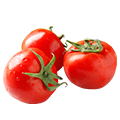
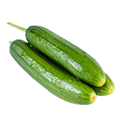 Tomatoes and cucumbers
Tomatoes and cucumbers are high-light crops as well. They love light and require more light than bell peppers. Indoor tomatoes and cucumbers require about 12 to 15 hours of artificial lighting. LED grow lights are ideal for indoor growing to maximize the yields and improve quality with high energy efficiency.
The optimal PPFD for the vegetative stage is 400-500 µMol/m2/s. The flowering and fruiting stage needs high PPFD, about 500-600 µMol/m2/s. But the tall plants and large leaves of tomatoes and cucumbers cause uneven light distribution. Upper leaves shade the lower leaves and resulting in insufficient light.
Using inter-lighting LED grow lights can solve the problem perfectly. The inter-lighting LED grow lights can provide uniform lighting from top to bottom for tomato and cucumber plants.