
High-Red Light From Both Above and Below the Canopy Delivers What Top Lighting Alone Cannot
For years, commercial horticulture has relied on a simple rule: if plant performance drops, increase the top lighting. More fixtures, more PPFD, more intensity from above.
That model is not wrong. It is just incomplete.
Light intensity drops exponentially as photons travel through successive leaf layers. In a dense commercial canopy, the lower third of the plant commonly receives less than 20% of the PPFD measured at the canopy top.
The industry has started calling attention to this problem with the concept: "Red Sandwich." It describes delivering high-red spectrum light from both above and below the canopy simultaneously.
The Problem Top Lighting Alone Cannot Solve
Top lighting cannot distribute light evenly through a dense canopy. Fixture efficiency does not change this. In both horizontal trellis systems and vertical grow walls, the upper leaf layer intercepts most of the incoming photons before they reach the lower canopy.
Two factors drive this. First, leaf absorption and shading remove a large share of photons at each layer. Second, the Inverse Square Law reduces intensity as the distance from the source increases. The combined effect is a steep drop in usable light below the canopy surface.
That means, a crop running 1,000 µmol/m²/s at the canopy top may deliver less than 200 µmol/m²/s to bud sites in the lower third.
The result is predictable. Flower development becomes uneven. The top canopy is exposed to excess intensity, increasing the risk of photobleaching. Energy use becomes inefficient because a large portion of the output does not contribute to productive photosynthesis.
Why High-Red Light Matters
When we say high-red light, we’re talking about an LED grow light deliberately weighted toward the 640nm to 680nm wavelength range, especially the 660 nm.
The reason high-red spectrum is the right choice for under-canopy delivery comes down to two factors: biological targeting and photon efficiency.
The red band does the heavy lifting in photosynthesis.
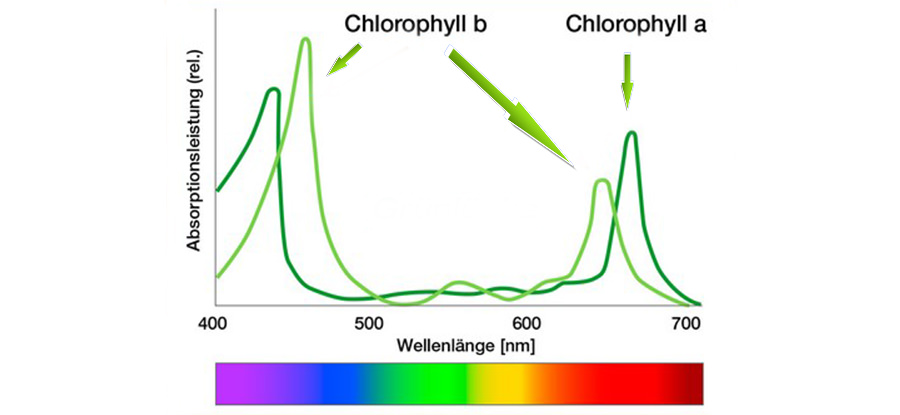
Chlorophyll a and chlorophyll b, the primary photosynthetic pigments in most crop plants, absorb light most efficiently in the red band between 640nm and 680nm. This is not a marginal efficiency difference. Photons in this range drive the photochemical reactions in the thylakoid membrane that produce the ATP and NADPH the plant uses for growth. A fixture spectrum weighted toward red delivers photons that the plant is biologically equipped to use efficiently.
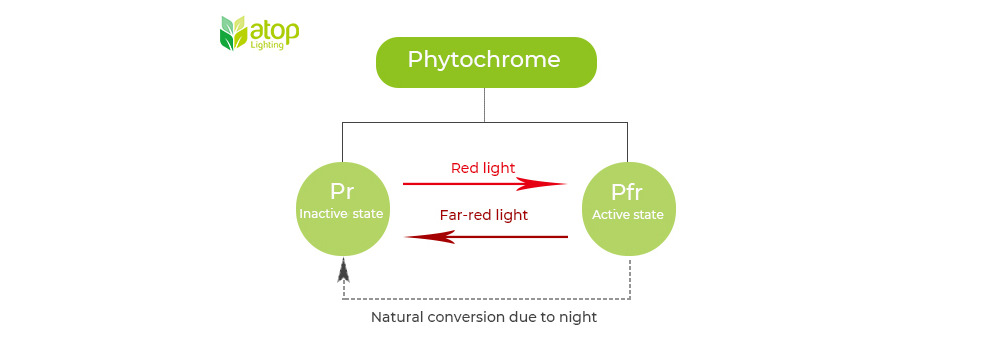
Phytochrome response is wavelength-specific.
Red light at approximately 660nm activates the Pfr form of phytochrome, the active state that drives flowering initiation, stem elongation control, and leaf expansion in photoperiod-sensitive crops. This is particularly relevant in cannabis cultivation, where phytochrome-mediated flowering response directly affects crop timing and consistency. Delivering red light to lower canopy tissue is not just about photosynthesis. It is about ensuring the whole plant receives the spectral signal it needs to develop uniformly.
Red supports flowering and biomass formation.
For crops like cannabis and tomatoes, red light directly influences reproductive development and biomass allocation. When the lower canopy receives red light, it contributes more carbon, which supports better uniformity in fruiting and flowering.
What Dual-Layer High-Red Light Actually Is
Dual-layer high-red light is a system design that delivers a red-weighted spectrum to the canopy from two positions at the same time: above and below. It combines conventional top lighting with under-canopy or inter-canopy fixtures.
How the Two Layers Work Together
Top lighting still provides primary coverage. It remains full-spectrum, including a strong red component. The difference is in the operating strategy. It no longer needs to be driven at maximum intensity to compensate for poor light penetration. Instead, it can be set to a target PPFD that the upper canopy can use efficiently. This reduces photobleaching risk at the top while maintaining, or improving, total photon delivery across the whole plant.
The lower layer is installed within or below the canopy. Its role is to deliver photons directly into the mid and lower plant zones. These fixtures are typically slim, high-efficiency bars with wide beam angles to improve lateral spread and reduce shadowing.
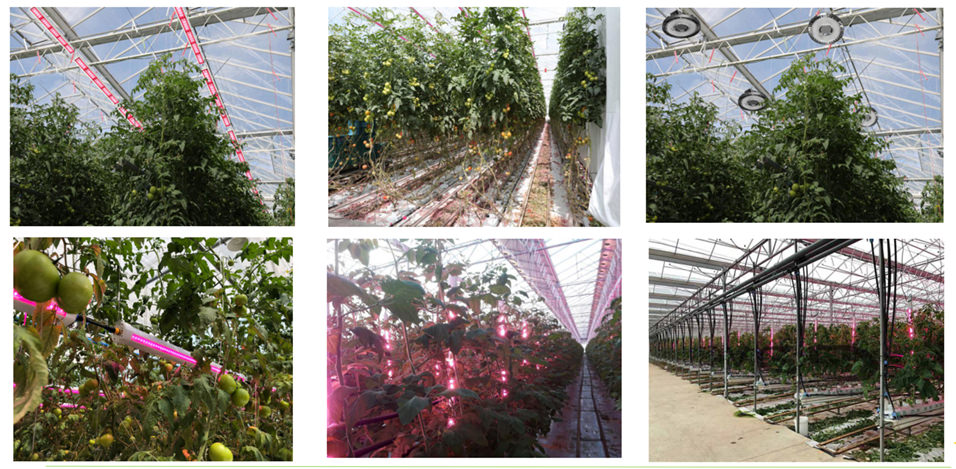
Under-canopy lighting directs photons upward into the lower third of the plant. Inter-canopy lighting sits within the plant structure and distributes light both horizontally and vertically. Both approaches improve light distribution where top lighting cannot reach.
Atop Lighting offers both configurations. The under-canopy bars use a 120-155 degree beam to support lower canopy development. The inter-canopy bars provide 240-360 degrees of output for uniform coverage from top to bottom, which is effective in vertical and high-density growing systems.
Looking to develop a customized lighting solution? Atop Lighting supports ODM and OEM programs. We support your product development and ensure the success of every project.