
How to Grow Passion Fruit Indoors with LED Grow Light
The unique aromatic flavor of passion fruit makes it a popular crop. However, its high price is partly due to the challenges of cultivation. Normally, passion fruit is grown outdoors in tropical and subtropical regions, where temperatures rarely drop below 60°F and abundant natural sunlight supports the vigorous growth of its climbing vines.
Today, advances in controlled-environment agriculture and LED grow lights make it possible to grow passion fruit indoors throughout the year. Whether for home gardeners, researchers, or commercial producers, this innovation offers the chance to harvest abundant, high-quality fruit without depending on climate or season.
Of course, this development brings both challenges and opportunities. In this guide, we’ll explore how to successfully grow passion fruit indoors using LED grow lights.
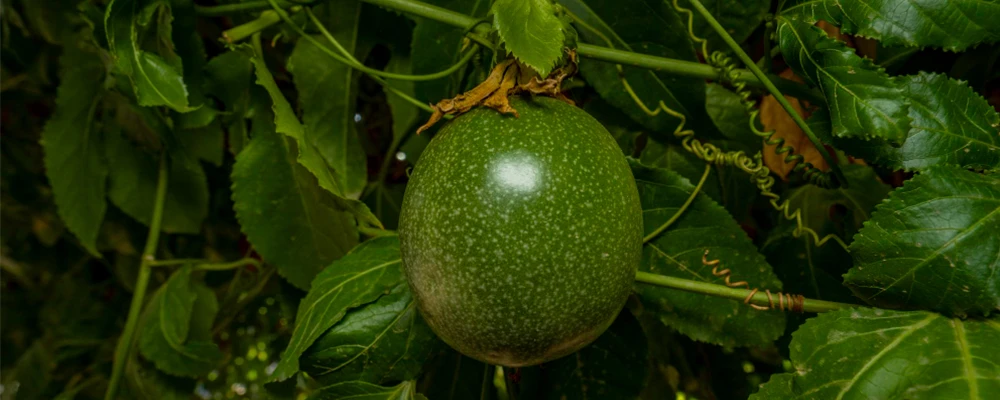
Why LED Grow Lights Are Essential for Indoor Passion Fruit
Passion fruit vines are among the most light-demanding plants you can grow indoors, requiring a daily light integral (DLI) of about 20–30 mol/m²/day. To put this in perspective, even the sunniest south-facing windows typically provide only 5–15 mol/m²/day during winter months, far below what passion fruit needs.
This high light demand comes from the plant’s tropical origins, where it evolved under intense, year-round sunlight. Without sufficient light, passion fruit vines will stretch toward windows or lamps, grow weakly, fail to flower, and may even drop developing fruits. For this reason, supplemental artificial lighting is not optional. It’s essential.
Why Choose LEDs?
LED grow lights are the best choice for passion fruit because they combine high energy efficiency, long lifespan, and tailored light output. Unlike older technologies, LEDs can deliver the spectrum and intensity that tropical vines need without excessive heat or wasted electricity.
Research also highlights their benefits. A 2023 study by Manuel Alva Obregón in the Revista de la Facultad de Agronomía La Molina [1] found that both light type and seed scarification significantly affect passion fruit germination. Under LED lighting, mechanically scarified seeds reached a 95.5% germination rate, compared to only 46% under fluorescent lighting. This demonstrates that LEDs dramatically improve early-stage success.
Lighting Requirements for Indoor Passion Fruit
Passion fruit is a light-hungry plant. In its natural environment, it thrives under full sun, requiring at least six hours of direct sunlight each day to achieve a daily light integral (DLI) of about 20–30 mol/m²/day. Indoors, however, natural sunlight is often insufficient, especially in the winter months. This is where LED grow lights become essential, allowing growers to mimic natural light conditions and meet the plant’s demanding needs.
Seedling Stage
Seedlings benefit from long days of light but at lower intensities. Research published in Scientific Reports (2021) showed that carefully tuned LED lighting significantly improves passion fruit seedling growth [2]. The best results were achieved under 14 hours of light per day, at a moderate intensity of 100 μmol m⁻² s⁻¹, using a spectrum rich in blue light (about 70% blue and 30% red). Under these conditions, seedlings grew taller, developed sturdier stems, produced more leaves, and built stronger root systems compared to those grown under fluorescent lights or other LED settings.
Flowering and Fruiting Stage
As plants mature, their lighting requirements change. Flowering passion fruit vines need about 16 hours of light per day with higher intensity and a red-rich spectrum. Passion fruit is a long-day plant, meaning flowering and fruit production naturally peak during summer when day length exceeds 11 hours. Indoors, supplementing with LEDs ensures the plant receives enough hours of light to trigger flowering. Red wavelengths are especially effective at stimulating the transition from vegetative growth to flowering and fruiting.
However, light alone is not always enough. Some growers notice that even with long-day, red-rich lighting, flowers fail to form during cooler months. This is because passion fruit flower buds only develop when temperatures range between 15 and 30 °C. Without adequate warmth, lighting cannot fully trigger flowering. Successful indoor growing, therefore, requires both proper light and temperature management.
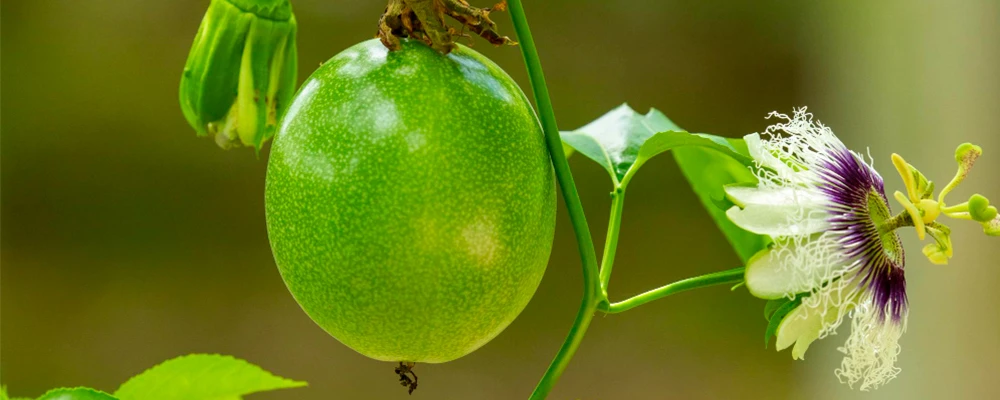
How Atop Can Help
At Atop, we provide customized LED spectra and OEM/ODM solutions designed specifically for your needs. Our lighting systems are engineered to support each stage of growth, from seedling establishment to flowering and fruiting, helping you achieve stronger plants, higher yields, and greater business success. With Atop, you gain a reliable partner committed to your indoor farming goals.
Reference
- Alva Obregón, M. (2023). Effect of light type and mechanical scarification on the germination of passion fruit seeds (Passiflora edulis var. flavicarpa). Revista de la Facultad de Agronomía La Molina
- Liang, D., Yousef, A.F., Wei, X. et al. Increasing the performance of Passion fruit (Passiflora edulis) seedlings by LED light regimes. Sci Rep 11, 20967 (2021). https://doi.org/10.1038/s41598-021-00103-1