
Medical VS Recreational Cannabis Guide
Cannabis is a very Multi-purpose crop with very high value. In recent years, the cannabis industry has become very hot, especially the indoor cultivation of cannabis with the help of LED grow lights. The rise of the cannabis industry is largely due to a substantial change in attitudes towards the cannabis plant. When it comes to the use and value of marijuana, people usually divide it into three categories: industrial, recreational, and medical.
Whether used for industrial, recreational, or medical purposes, cannabis is more valuable than people think. More and more people show great interest in it and continue to explore its application.
1. For medical purposes
Medical marijuana uses the marijuana plant or chemicals in it to treat diseases or conditions. Marijuana has many applications for medical purposes. And there is increasing interest in the potential prospect of cannabis for a variety of medical purposes. Here are 20 exploring applications of cannabis in the field of medical purposes.
- Relief of chronic pain
- Improves lung capacity
- Help lose weight
- Regulate and prevent diabetes
- Fight cancer
- Helps treat depression
- Shows promise in autism treatment
- Regulate seizures
- Mend bones
- Helps with ADHD/ADD
- Treatment for glaucoma
- Alleviate anxiety
- Slow development of Alzheimer’s disease
- Deal with pain linked to arthritis
- Helps with PTSD symptoms
- Helps provide relief to individuals with multiple sclerosis
- Reduces side effects linked to hepatitis C and increases the effectiveness of treatment
- Treats inflammatory bowel diseases
- Helps with tremors associated with Parkinson’s disease
- Helps with alcoholism
Though it’s not yet proven to help many of these conditions, with a few exceptions, each of these advances in medical applications will be significant, as once the researchers make breakthroughs, it will benefit millions of patients.
2. For recreational purposes
Recreational marijuana use involves using cannabis for personal enjoyment rather than for health purposes. The recreational use of marijuana can be contrasted with medical marijuana use, which involves the prescribed use of cannabis to manage the symptoms of some medical conditions.
If the purpose of medical marijuana is to relieve symptoms of a health condition (such as pain), the purpose of recreational marijuana largely boils down to experiencing the high it brings. In the recreational use of marijuana, the following two ways are common.
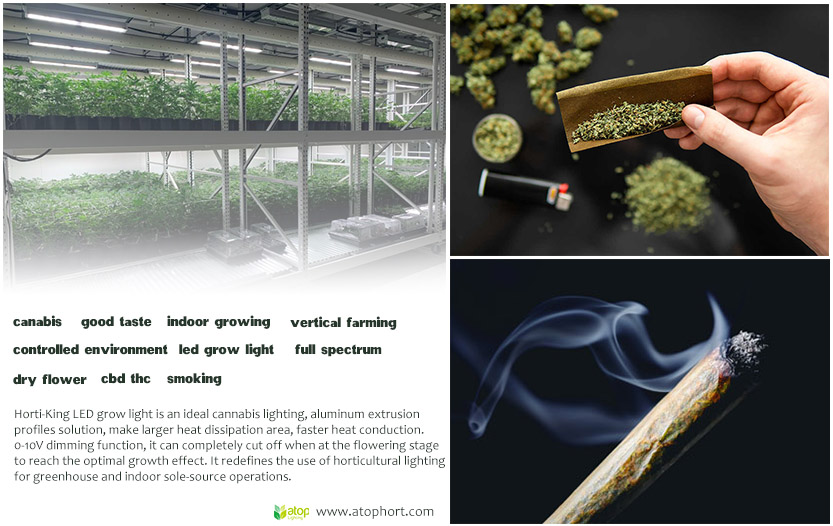
Smoking. Usually, smoking is the direct smoking of dried cannabis flowers. Roll dried cannabis flowers or a mixture of tobacco and cannabis into a cigarette or smoke with a pipe or a bong (which is a filtration device that uses water), and then smoke it just like the way you smoke a regular cigarette.
The way of smoking is more demanding in taste. Therefore, cannabis smoking consumers are picky about the quality of dried flowers. And generally, good-quality dried flowers are mostly produced in a stable indoor growth environment.
Here, the conditions for growing cannabis will be optimized to the maximum, including temperature, humidity, water, fertilizer, carbon dioxide concentration, etc., and the light environment will also get the best match to fully meet the light needs of marijuana indoor growing. That's something you can't do outdoors.
In particular, growers can also take advantage of special light components, such as UV grow light, to induce the production of proteins which may affect its taste.
Smoke or ingest essential oils. In addition to the dry flower smoking mentioned above, you can also smoke or ingest the essential oils directly by injection, dab, or spray. The active ingredient is THC ( tetrahydrocannabinol) extracted from the cannabis plant. THC is the pleasure-producing component of cannabis.
Marijuana edibles. Although the pleasure produced by marijuana edibles may have come relatively late, there is now growing interest in exploring the use of oils derived from the cannabis plant for cooking and baking.
About one-third of hemp seed's weight comes from hemp oil, which is edible but highly nutritious, containing essential fatty acids. The whole seed is about 25% protein, and is a good source of calcium and iron, as well as having more omega-3 than walnuts--all of which point to hemp's potential for food and as a dietary supplement.
Many tradesmen have already started to experiment with foods fortified with cannabis, like cakes, cookies, gummy bears, cereal, granola bars, chewing gum, cheese, chocolate, snacks, pastry, lollipops, protein powder, and so on, and these edibles have come to fashion in many states where marijuana is legal.
As well, the beverage industry, which has been so bullish among many investors, is also stepping up efforts to develop cannabis-related beverages such as beer, tea, soda water, and milk etc.
3. For industrial purposes
Hemp crops for industrial use are generally grown outdoors and are mostly industrial strains of hemp.
In terms of the industrial uses of hemp, the two most common uses are to make clothes and paper. In addition, hemp can also be made into good building materials such as insulation products, fiberboard, press board, concrete, etc. And it also has quite a potential in making plastics and biofuels. Last but not least, it is about one of its interesting uses- cleaning up soil pollution. Hemp has shown good potential in cleaning up land contaminated with fly ash, sewage sludge, or other heavy metals at the site of a nuclear disaster.
Disclaimer: This Content Is Intended For Educational Purposes Only. We Do Not Endorse Or Promote Illegal Activities Related To Cannabis.