
Are Blurple Grow Lights Good?
Have you ever heard of blurple grow lights? These lights emit a purple glow created by combining red and blue wavelengths. That is why they are called “blurple grow lights”.
For years, they were popular in the indoor growing world. Affordable and effective, blurple lights earned a reputation for promoting plant growth, especially cannabis, without breaking the bank.
Today, however, full-spectrum LED grow lights dominate the market. For commercial growers, it’s not just “Do they work?”, but rather “Are they truly the best option for maximizing yield and quality?”
In this blog, we’ll take a closer look at blurple grow lights, how they perform, and whether they’re still the right fit for your growing needs.
What are blurple grow lights?
Blurple grow lights are a type of LED grow lights that produce purple or pinkish-purple color light. The term “blurple” is a portmanteau of “blue” and “purple”.
These lights are made up of about 75-90% red LEDs and 25-10% blue LEDs. To the human eye, these lights appear purple or pink, which is why they’re called “blurple” light.
Blurple lights were developed based on early photosynthesis research, which showed that plants primarily use red and blue light for photosynthesis. The logic was: if plants don’t use green and other light efficiently, why waste energy producing it?
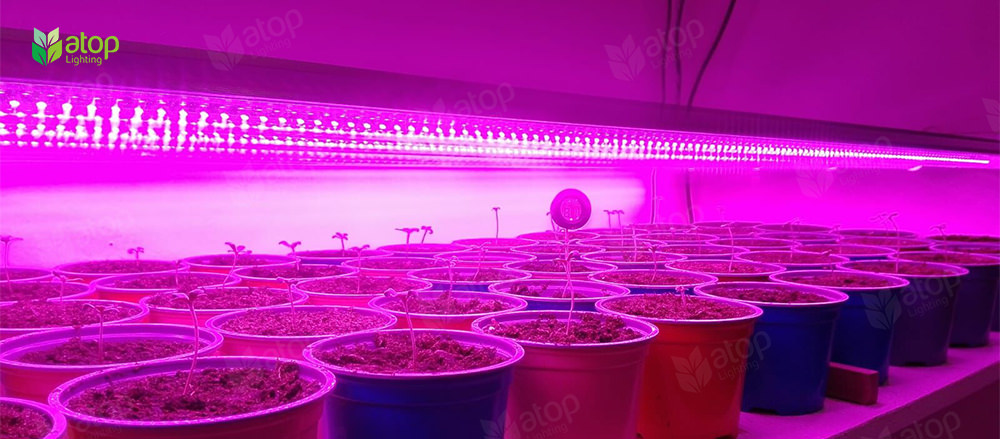
Do blurple grow lights work?
Yes, blurple grow lights do work, especially for supporting plant growth during the vegetative and flowering stages.
Blurple lights have high levels of red and blue in their spectrum, targeting the wavelengths chlorophyll absorbs most efficiently. Red light enhances flowering and fruiting, while blue light promotes leafy growth during the vegetative stage.
Additionally, they have been a more affordable entry point into the LEDs.
Disadvantages of blurple grow lights
Blurple grow lights are good, but they’re not always the best choice anymore.
One of the biggest issues is that they only give off red and blue light. Plants also need other colors, like green, far-red, and even UV light, for healthy growth and top-quality harvests. Green light, for example, can reach the lower leaves that red and blue light can’t. Far-red light helps shape the plant, affects stem growth, and plays a role in flowering. UV light can boost valuable compounds like terpenes, antioxidants, and cannabinoids, which make crops more appealing and valuable.
Another issue is the strain these lights place on the human eye. That bright purple glow can cause eye strain, headaches, and fatigue for anyone working in the grow room for long periods. Over time, it can make the space unpleasant to work in and hurt productivity, which is critical in commercial operations.
Blurple light also makes it harder to spot problems with your plants. The color can hide early signs of trouble, like yellow leaves, pests, or mold. By the time you notice something’s wrong, the issue might already be serious, leading to lower yields, lost crops, and extra costs.
Blurple vs. Full spectrum grow lights
As more research shows how different wavelengths benefit plant growth, full-spectrum LED grow lights have taken center stage in today’s market.
A true full-spectrum light goes beyond just covering red and blue; it’s carefully engineered to mimic natural sunlight, delivering a balanced range of wavelengths that also include beneficial UV and far-red light. This broader spectrum has been proven to boost yields, improve crop quality, and offer a higher return on investment.
Let’s check the differences between blurple and full spectrum LED grow lights.
|
Feature |
Blurple grow lights |
Full-spectrum grow lights |
|
Spectrum range |
Blue and red |
Full PAR range, UV, and IR |
|
Light appearance |
Purple, pink |
Natural white |
|
Plant visibility |
Poor, hard to spot issues |
Easy to inspect and monitor plants |
|
Impact on plants |
Provide the minimum for photosynthesis |
Promote balance growth |
|
Work environment |
Uncomfortable lighting for human eyes |
Natural-looking lighting, more pleasant |
|
Customization options |
Mostly on/off |
Dimming, spectrum tuning, and app control |
|
Applications |
Best for hobbyists, beginners, small-scale projects, specific research, and a tight budget |
Commercial growers and professional cultivators |
So, are blurple grow lights good? The answer is yes, they can be effective. However, they’re not always the best choice.
If you’re on a tight budget, just starting out, or conducting research focused on specific light spectrums, blurple grow lights can serve you well.
But for commercial growers aiming for maximum productivity, a better working environment, and balanced plant development, full-spectrum LED grow lights are generally the better choice.
At Atop, we offer customized lighting solutions to your needs. Looking for the perfect light spectrum for your project? Contact us.